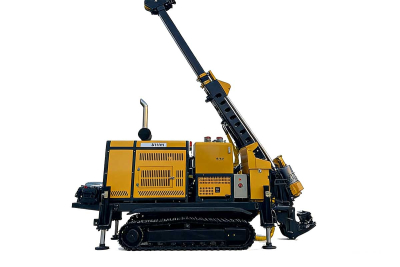
Full Life‑Cycle Maintenance for Core Drill Rigs
Full hydraulic core drilling rigs are essential equipment for deep geological exploration, mineral prospecting, and infrastructure investigation. Designed for harsh working conditions such as mountains, forests, deserts, and high-altitude regions, they are required to operate continuously under high load and extreme environments.
However, statistics show that unplanned downtime caused by hydraulic leakage, power head wear, and chuck rubber sleeve aging accounts for more than 30% of total project delays in exploration operations, significantly increasing operational costs and reducing project efficiency.
To address these challenges, our company has launched a nationwide “Four-in-One Technical Maintenance Service System”, integrating graded maintenance, on-site inspection, remote support, and practical training, delivering a complete life-cycle service solution for drilling equipment from deployment to retirement.
Through standardized maintenance procedures and rapid response support, we help clients reduce downtime, extend equipment lifespan, and maximize drilling productivity in demanding field conditions.

1. Core Drill Rig Maintenance Mechanism
Field technical engineers strictly implement a three-level maintenance standard based on equipment operating hours and establish closed-loop inspection records to fundamentally reverse the industry habit of “emphasizing usage over maintenance.”
Daily Basic Maintenance (0–8 operating hours per shift)
Before and after each operation, operators must clean mud, cuttings, and dust attached to the machine body. High-pressure air guns should be used to remove sediment from the cooling fins of the power head and the track gaps.
Check whether the hydraulic oil level is within the middle of the scale range, maintain oil temperature within the optimal range of 35–55°C, and visually inspect all high-pressure pipeline joints for leakage.
Inspect the elasticity of the chuck rubber sleeve and wear condition of drill rod threads, and apply sufficient extreme-pressure lubricating grease according to specifications.
Use a torque wrench to tighten all bolts on the frame, slewing support, and track chassis to ensure no loosening.
All inspection results must be recorded in an electronic checklist system for full traceability.
Medium-Term Periodic Maintenance (500 / 1000 operating hours)
Replace hydraulic oil filters, fuel filters, and air filters on schedule. Take on-site samples of hydraulic oil; if it appears cloudy or viscosity drops below standard, perform a complete oil change and oil tank cleaning.
Disassemble and inspect hydraulic motor end-face wear clearance and slewing bearing play, and adjust track tension to standard sag requirements.
Service mud pump piston seals and valve seats, clean engine cooling pipelines and intercoolers to eliminate overheating and system pressure loss risks.
After completion, conduct a load test run and record pressure and flow data for documentation.
Annual Overhaul Maintenance (7,000–10,000 operating hours)
Perform full system disassembly and inspection. Core hydraulic pumps, motors, and power assemblies must be tested on a performance bench to verify volumetric efficiency.
Replace all aged oil seals, O-rings, and high-pressure steel braided hoses.
Recalibrate pressure parameters of all valve groups on the control console and inspect sensor accuracy in the electronic control system.
Conduct magnetic particle inspection on main welds and load-bearing structures to detect fatigue cracks.
Complete full rust removal, priming, and topcoat anti-corrosion treatment to restore original factory performance standards.
Customized Maintenance for Special Environments
For high-altitude hypoxia, extreme cold, and humid rainy conditions, customized solutions are provided:
Low-temperature environments: install electric heating insulation sleeves on hydraulic tanks and mud pipelines
Rainy regions: enhance sealing strip inspection and replace drying agents in electrical cabinets
Dusty environments: increase daily air filter cleaning frequency
Through targeted preventive maintenance strategies, seasonal failures are significantly reduced at the source.

2. On-Site + Remote Dual Technical Support System
Exploration sites are often remote, with limited repair resources and long spare parts supply cycles. To address this, we have established an emergency support mechanism of “1-hour remote response, 24-hour on-site engineer arrival”, aiming to close the last mile of maintenance services.
During this maintenance campaign, technical teams were divided into three groups to conduct comprehensive inspections of dozens of UX-series and thousand-meter-class full hydraulic core drilling rigs.
They resolved common issues such as hydraulic internal leakage causing insufficient power head torque, insufficient rotary torque during stuck drilling, and lifting stagnation of core tubes.
For example, at a metal mining exploration site, a drilling rig experienced hydraulic cylinder crawling. Engineers quickly diagnosed pilot pressure and replenishment circuits, identified a faulty balance valve, and restored full-load operation within 2 hours.
A mobile spare parts warehouse was established on-site, stocked with filters, sealing kits, rubber sleeves, drill rod joints, and high-pressure hoses. This reduced average repair waiting time from 3 days to less than 1 day, improving repair efficiency by over 60%.
For remote mountainous or cross-border projects where on-site service is not possible, engineers provide remote video guidance via 5G platforms, covering hydraulic circuit routing, pressure adjustment procedures, and component replacement techniques, enabling operators to independently resolve minor faults and avoid shutdown delays.
3. Practical Training Program for Core Drill Rig Maintenance
“Equipment maintenance cannot rely solely on after-sales service. Only when drilling teams master standardized maintenance procedures can failure rates be continuously reduced,” said the technical director.
This training program targets drill operators, rig managers, and maintenance technicians, adopting a theory + disassembly practice + fault simulation model.
Training covers:
Hydraulic system maintenance precautions (e.g., mixing different hydraulic oils is strictly prohibited)
Proper oil selection standards (viscosity selection based on ambient temperature)
Quantitative wear identification criteria (e.g., chuck rubber sleeve wear exceeding 2 mm requires replacement)
Emergency response procedures for stuck drilling and hose rupture
Participants are also guided through hands-on operations including power head disassembly and assembly, rapid filter replacement, and precise lubrication point servicing.
All trainees must pass practical assessments and receive internal maintenance certification, enabling them to independently perform daily inspections, weekly maintenance, and basic fault diagnosis.
Field data shows that drilling rigs under standardized maintenance experience:
45% reduction in overall failure rate
30% extension in key component service life
Reduction of annual downtime per project from 12 days to under 5 days
This significantly improves drilling efficiency and reduces overall project costs for deep mineral exploration, hydrogeology surveys, and geotechnical engineering projects.
4. Full-Cycle Operation & Maintenance Service Upgrade: Enabling Efficient Green Exploration
Looking forward, we will continue to improve our maintenance service network:
Expand regional service stations with repair workshops, hydraulic test benches, and flaw detection equipment
Develop an intelligent monitoring system based on IoT sensors to collect real-time data such as oil pressure, temperature, vibration, and operating hours
Use predictive algorithms to forecast component fatigue and enable predictive maintenance
Enhance global service systems for overseas markets, including multilingual remote support, overseas spare parts warehouses, and localized training programs
Through refined maintenance practices and full life-cycle services, we aim to ensure stable operation of drilling equipment and support efficient geological exploration.
In the future, we will continue to advance maintenance technology innovation for drilling equipment, continuously upgrade standardized service systems, and provide more reliable, efficient, and sustainable equipment support for global mining, water conservancy, infrastructure, and new energy exploration projects—working together with global clients to embrace a new era of deep-earth exploration.