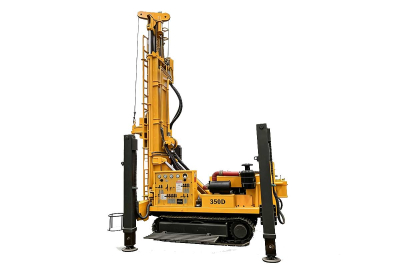
Hydraulic Pile Driver Equipment Outlook
Hydraulic pile driver machines are among the core equipment driving the expansion of the global construction and infrastructure sectors, and they are now witnessing unprecedented market demand. As urbanization accelerates and major infrastructure projects break ground across continents, the need for reliable, efficient, and environmentally friendly piling solutions has never been more pressing. Among all piling equipment types, hydraulic pile driving equipment captured the largest market share in 2025, accounting for 35.2% of the global piling equipment market with an estimated value of $2.2 billion. This dominance reflects the industry's growing preference for hydraulic systems, which offer distinct advantages over diesel and pneumatic alternatives in terms of control precision, energy efficiency, and compliance with increasingly stringent noise and vibration regulations.

Market Overview: Size, Growth & Projections
Global Pile Driving Equipment Market
The global pile driving equipment market was valued at $6.2 billion in 2025** and is projected to reach **$9.3 billion by 2034, representing a compound annual growth rate (CAGR) of 5.3% over the forecast period. This steady expansion reflects sustained demand for deep foundation solutions across construction, marine, infrastructure, and energy sectors worldwide.
Hydraulic Pile Driver Segment Performance
Within this broader market, hydraulic pile driver machines are emerging as the technology of choice. The hydraulic static pile driver market alone is expected to grow from $693.4 million in 2025 to $1.2 billion by 2035, at a CAGR of 5.6%. Meanwhile, the hydraulic impact pile hammers market—a key sub-segment—grew from $1.24 billion in 2025 to $1.34 billion in 2026 at a CAGR of 8.1%, with projections reaching $1.81 billion by 2030.
These figures underscore a clear trajectory: the hydraulic pile driver machine is not merely maintaining its market position—it is steadily gaining ground across all major application areas.
Key Growth Drivers
1. Infrastructure Modernization and Urban Development
Public infrastructure initiatives form the structural foundation of sustained demand for hydraulic pile driving equipment. Governments worldwide are investing heavily in transportation networks, bridges, ports, airports, and urban transit systems. Rapid urbanization in emerging economies—particularly in Asia Pacific nations including India, China, Vietnam, and Indonesia—has created unprecedented demand for deep foundation solutions.
Major government initiatives such as India’s Smart Cities Mission, China’s Belt and Road Initiative, and ASEAN infrastructure connectivity projects necessitate extensive deep foundation work, directly boosting demand for advanced pile driver machines.
2. Renewable Energy Expansion
The renewable energy sector has emerged as a critical market driver. Offshore wind farms require large-capacity piling systems to install monopile foundations in challenging marine environments. According to the International Energy Agency (IEA), investment in renewable power rose from $596 billion in 2022 to over $659 billion in 2023. This surge in renewable energy investments directly supports demand for hydraulic pile hammers, as heavy-duty equipment is required to install deep foundations in offshore wind farms and other energy infrastructure projects.
3. Urban Construction and Environmental Compliance
Urban construction environments impose stricter noise, vibration, and emissions controls, accelerating adoption of modern pile driver machines with enhanced precision and environmental compliance capabilities. Noise and vibration regulations influence approximately 42% of equipment procurement decisions. Hydraulic pile driver machines, with their lower noise profiles and reduced vibration emissions compared to diesel counterparts, are increasingly preferred for sensitive applications in densely populated areas.

Technology Evolution: What’s New in Hydraulic Pile Driving
Superior Performance Characteristics
Modern hydraulic pile driving equipment offers distinct advantages over traditional diesel hammers:
Higher energy efficiency with lower fuel consumption
Reduced noise and vibration—critical for urban and environmentally sensitive sites
Double-acting operation with cores approximately 50% lighter than diesel hammers under the same piling energy
Consistent energy delivery that minimizes stress on piles and ensures uniform installation depth—critical for long-term structural stability
Intelligent Controls and Automation
The integration of intelligent controls and automation represents a major leap in hydraulic pile driver technology. Modern systems use sensors and adaptive software to monitor and adjust performance in real time. Key advancements include:
IoT integration enabling remote monitoring and proactive maintenance scheduling
Sensor integration tracking pressure, impact frequency, and material resistance for real-time adjustments
Adaptive software algorithms modifying impact energy based on material hardness
Contractors report nearly 34% improvement in pile vertical accuracy and about 26% reduction in surrounding soil disturbance with modern hydraulic systems.
Static Piling Technology
Static pile drivers are gaining particular traction in urban foundation projects where noise and vibration limits are strictly enforced. Compared to traditional impact piling, static piling reduces ground vibration by approximately 70%, making it suitable for dense residential and commercial zones. Hydraulic static pile drivers dominate with approximately 63% adoption due to higher load capacity and precise control.
Regional Market Outlook
Asia Pacific: The Dominant Force
Asia Pacific emerged as the dominant regional market, commanding 38.5% of global revenue in 2025 with an estimated market value of $2.4 billion. The region is expected to hold approximately 40% market share in 2026, driven by extensive investment in core infrastructure development. Major government initiatives across India, China, Vietnam, and Indonesia continue to drive substantial demand for pile driving equipment.
North America and Europe
North America and Europe collectively account for 42.3% of the global market, with established construction sectors, stringent building codes, and ongoing infrastructure rehabilitation driving steady equipment demand. North America’s market share stands at 24.1%, supported by substantial investments in highway reconstruction, bridge reinforcement, and commercial real estate development.
Emerging Opportunities
The offshore wind sector represents a significant growth opportunity across all regions. Segmental growth is observed in the offshore wind sector, where hydraulic static pile drivers are gaining traction for installing foundations, reflecting a shift toward renewable energy solutions. The offshore segment is forecasted to grow the fastest through 2033.
Implications for B2B Buyers
For international procurement professionals and construction firms, the current market dynamics present both opportunities and considerations:
Technology Investment: The shift toward intelligent, automated hydraulic pile driver machines offers long-term operational efficiency gains. Buyers should prioritize equipment with IoT capabilities, real-time monitoring, and adaptive control systems.
Regional Strategy: With Asia Pacific dominating market growth, buyers with projects in the region may benefit from local sourcing and partnerships. China’s role in the global pile rig supply chain continues to expand, offering competitive pricing and customization options.
Compliance Readiness: As noise and vibration regulations tighten globally—influencing approximately 42% of equipment procurement decisions—investing in hydraulic pile driving equipment with advanced noise reduction and vibration control features is increasingly essential.
Sustainability Focus: The renewable energy sector’s growth trajectory suggests sustained demand for large-capacity hydraulic pile hammers capable of offshore foundation installation. Buyers serving this segment should prioritize equipment with marine-grade specifications and high impact energy capacity.
The hydraulic pile driver machine market is positioned for robust growth through 2035, driven by infrastructure modernization, renewable energy expansion, and technological advancement. With the hydraulic segment commanding the largest share of the piling equipment market and Asia Pacific leading regional demand, the outlook for manufacturers, suppliers, and buyers alike is decidedly positive.
As the industry continues to evolve toward smarter, quieter, and more efficient solutions, the hydraulic pile driver machine stands at the forefront of foundation engineering—delivering the performance, precision, and environmental compliance that modern construction demands. For B2B buyers navigating this dynamic market, staying informed about technological trends, regional dynamics, and key industry players is essential for making strategic procurement decisions that drive project success and long-term value.