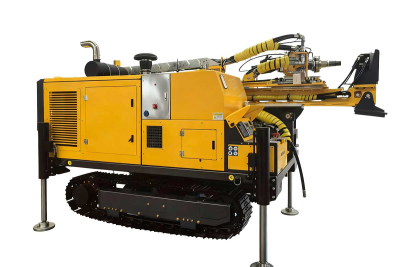
How to Reduce Downtime During Solar Pile Installation
Practical strategies EPCs are using to keep piling rigs running, crews productive and utility-scale solar projects on schedule
As utility-scale solar capacity additions accelerate worldwide, contractors are discovering that the critical path of a solar farm rarely runs through the module yard. It runs through the piling rig. When a solar pile driver stops, panel installation stops, torque checks stop, commissioning slips — and fixed site overhead keeps burning. Industry guidance now treats solar pile installation downtime as a schedule risk that must be engineered out before mobilization, not managed after the fact.
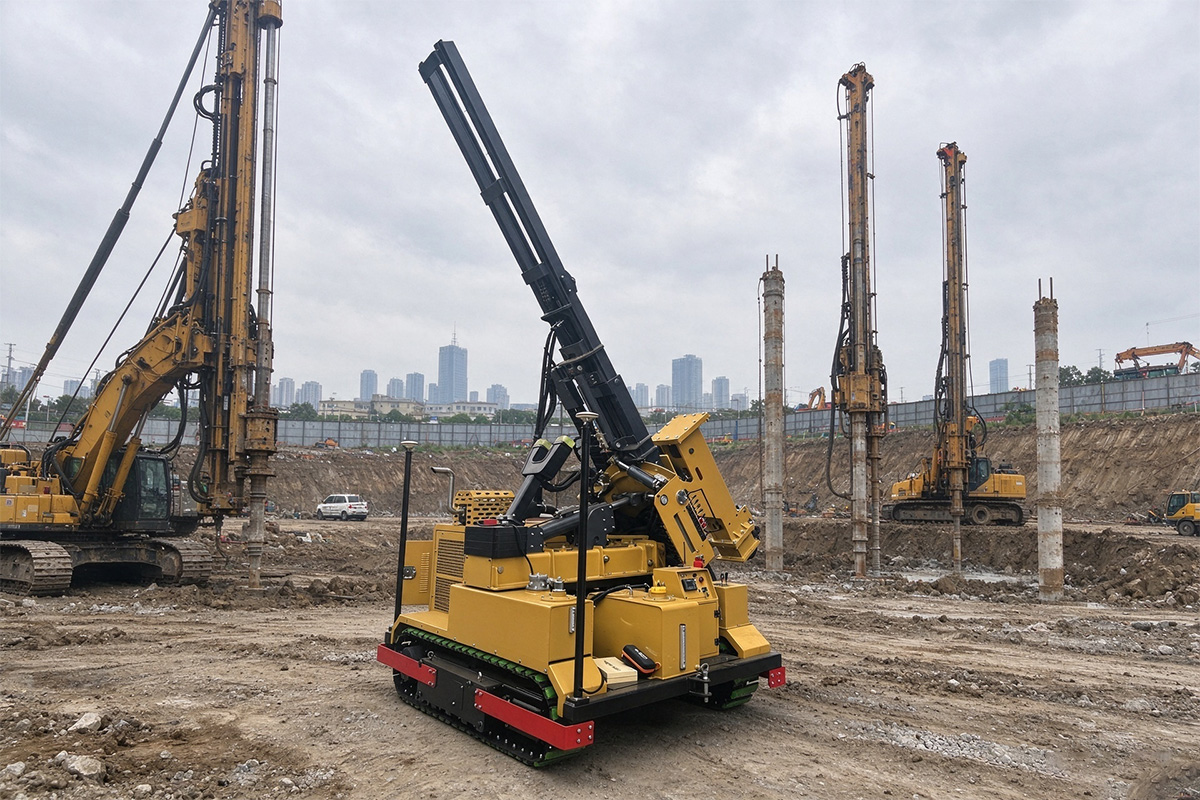
Why a Stopped Rig Is the Most Expensive Machine on Site
A single piling rig is often a single point of failure for the whole construction sequence. One widely cited field case describes a 4,000-pile project that deployed a single rig into unexpected hardpan soil: daily output collapsed from roughly 100 piles to 40, the mechanical crews downstream sat idle at full cost, and the schedule slipped by three weeks. Moving to a two-rig strategy with soil-specific driving heads restored a steady 180 piles per day, cut downstream idle-labor costs by about 40 percent and trimmed 15 days off the total program.
The economics are unforgiving. On projects where refusal — a pile hitting rock, cobbles or a buried obstruction before design depth — exceeds roughly half the foundations, remediation by drill-and-drive can add about $250 per foundation on top of a $68 installation price, with schedule delays costing up to $25,000 per week.
Six Root Causes of Piling Downtime
· Geotechnical surprises. Soil that shifts from soft clay to compacted ground or shallow bedrock forces tool changes, parameter resets or pre-drilling. Attachment mismatch — running a hydraulic hammer where a DTH hammer is needed, or an auger where the borehole will not hold shape — is consistently named the most common operator error, because it slows penetration and accelerates wear.
· Pile refusal and rework. Depth shortfalls, vertical misalignment and positional deviation usually pass visual inspection on driving day and surface later during panel mounting or survey. Across 50 or 100 piles, a small vertical angle error accumulates into visible row misalignment and costly rework.
· Single-rig dependency. With zero redundancy, routine servicing or a hydraulic fault halts the entire downstream sequence, and lost production days can only be recovered with overtime.
· Equipment abuse. Full-load operation straight after start-up, abrupt lever strokes, high-speed slewing with the drill rod still down, and long-distance travel under load are repeatedly linked to seal leaks, pump wear, slewing-bearing damage and undercarriage deformation — the classic sources of unplanned downtime.
· Weather and access. Heavy rain and freezing conditions can make ground unsuitable for driving or block site access entirely. Foundation choice changes exposure: driven piles can continue in wet, frozen or muddy ground, while pre-drilled grouted systems are highly sensitive to rain and cure schedules.
· Flow imbalance downstream. Even a healthy rig creates downtime if the racking crew cannot absorb its output — or if it cannot feed them fast enough. Matching rig output to mechanical-installation capacity is a scheduling discipline, not an afterthought.
The Anti-Downtime Playbook
· Validate the ground before the rigs arrive. Walk and test the site in zones, log resistance by area, and confirm SPT N-values or CPT data against the design assumptions used for pile depth. Where rock or cobbles are likely, model the trade-off early: driven piles remain fastest in clean soil, while ground screws can be installed at roughly 40 percent higher daily rates on difficult ground and provide real-time torque verification on every foundation. Cost parity between the two tends to land near a 29 percent refusal rate — beyond that, alternative foundations often win on both cost and schedule.
· Match attachment and foundation to soil. Augers for soft soil and sand, DTH hammers for hard rock, hydraulic pile hammers for standard conditions. Getting this right is the single largest lever on daily pile count.
· Build redundancy into the fleet. A minimum two-rig deployment is now recommended for large arrays, both as a buffer against mechanical failure and as a way to balance supply against downstream demand.
· Run preventive maintenance and stage spares. Scheduled service, backup hydraulic components and consumables — drill rods, bits, seals — on site convert a multi-day stoppage into a short intervention.
· Calibrate GPS, but keep the human in the loop. GPS-guided piling delivers fixed-point positioning and tight verticality and position tolerances, but it does not decide depth, vertical alignment or attachment choice. Treating automation as full autopilot is one of the most common technology errors on solar sites.
· Train operators and enforce standard procedures. Low-speed probing in uncertain ground, smooth lever operation, pressure release on resistance, full rod lift before slewing, and level ground before driving protect both the machine and the pile. Operator training bundled with machine purchases is becoming a procurement requirement rather than a perk.
· Schedule around weather, and use digital monitoring. Forecast-driven sequencing, torque and blow-count logging per pile, and daily production dashboards let superintendents spot a falling rate within a shift instead of a week.
Bottom Line for Solar EPCs
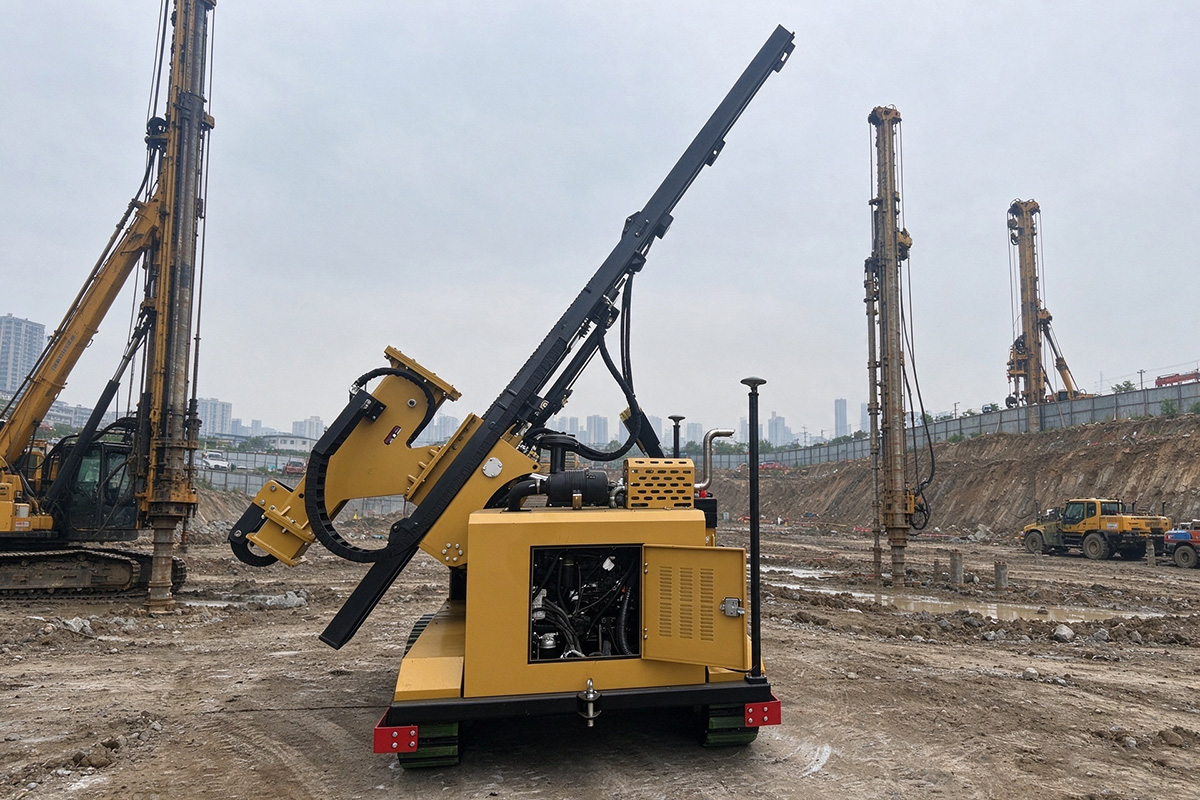
The cheapest pile is the one driven correctly the first time. Contractors who front-load geotechnical validation, right-size the rig fleet, maintain equipment proactively and keep installation flow balanced are reporting steadier daily output, less rework and fewer weather-related slips. As one common industry refrain puts it: a rig that stops stops the whole site — and on a utility-scale solar build, that is measured in weeks, not hours.
Key Takeaways
· Map soil by zone before mobilization to prevent attachment mismatch and refusal.
· Deploy at least two rigs on large arrays to remove the single point of failure.
· Keep spares and preventive maintenance on site; abuse of hydraulics and slewing drives most breakdowns.
· Match rig output to racking crew capacity so neither side waits.
· Choose foundation type by ground conditions, not habit: driven pile for clean soil, ground screw where refusal risk is high.