Air Drilling vs. Mud Drilling for Deep Water Wells
Choosing the right drilling method is essential for successful deep water well construction. When comparing air drilling vs. mud drilling for deep water wells, contractors and equipment buyers need to consider geological conditions, borehole stability, groundwater characteristics, drilling efficiency, and project costs. Both methods are widely used in water well drilling, but they work differently and are suitable for different ground conditions.
Air drilling uses compressed air to remove drilling cuttings from the borehole, while mud drilling uses circulating drilling fluid to transport rock fragments and help stabilize the well. Understanding these differences can help buyers select the right water well drilling rig and supporting equipment for their projects.
For drilling contractors, agricultural water supply projects, and groundwater development companies, choosing a suitable drilling method is not simply a technical decision. It also affects equipment configuration, daily operating costs, and overall project performance.
1. What Is Air Drilling?
Air drilling is a drilling method that uses compressed air as the primary circulating medium to remove cuttings from the borehole. The air is generally supplied by an external air compressor and delivered through the drill string.
As the drill bit penetrates the formation, compressed air carries rock fragments and other drilling cuttings upward through the annular space between the drill pipe and the borehole wall.
For harder rock formations, air drilling is often combined with a down-the-hole (DTH) hammer. The hammer uses compressed air to operate an impact mechanism near the drill bit, helping break hard rock during drilling.
Main Features of Air Drilling
Uses compressed air instead of conventional drilling mud as the primary circulation medium.
Can be suitable for hard rock and certain fractured formations.
Supports DTH hammer drilling applications.
Reduces the need to prepare and circulate large volumes of conventional drilling fluid.
Requires an appropriately sized air compressor and compatible drilling tools.
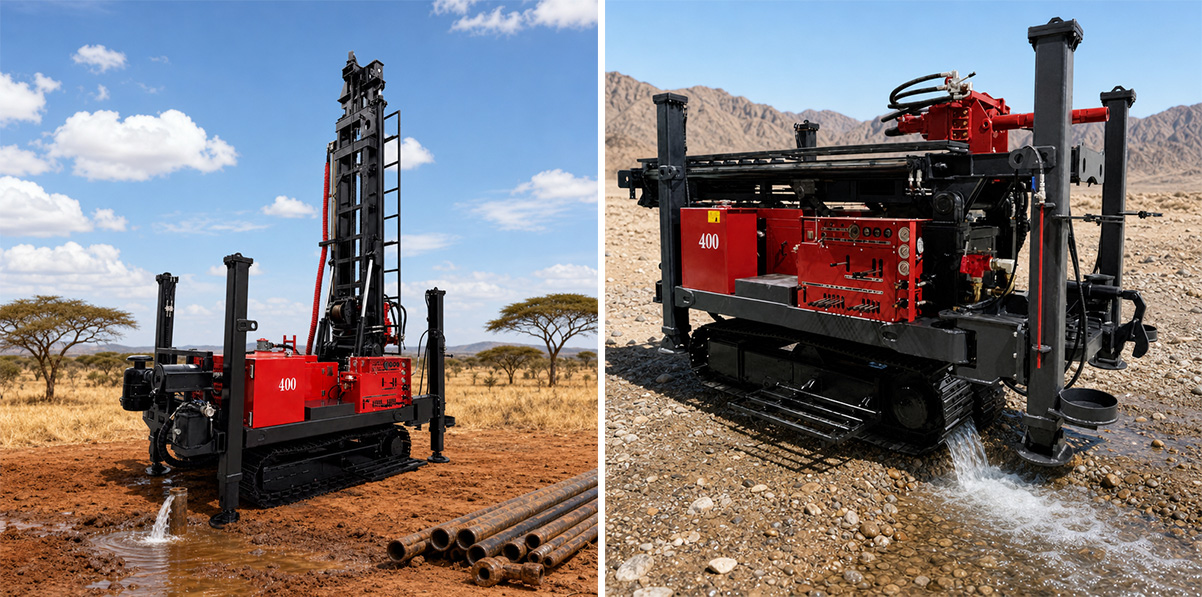
A DTH water well drilling rig is commonly considered for projects involving hard rock formations. However, the actual suitability of air drilling depends on rock conditions, groundwater inflow, borehole stability, and the availability of suitable supporting equipment.
2. What Is Mud Drilling?
Mud drilling, commonly associated with mud rotary drilling, uses drilling fluid circulated through the drill string and returned to the surface through the annular space.
The drilling fluid may be water-based and contain suitable additives, depending on the geological conditions and project requirements.
During drilling, the fluid performs several important functions. It transports cuttings out of the borehole, helps control borehole pressure, cools and lubricates drilling tools, and can help form a filter cake on the borehole wall to reduce fluid loss and improve borehole stability.
Main Features of Mud Drilling
Uses circulating drilling fluid to carry cuttings to the surface.
Helps maintain borehole stability in suitable soil and sediment formations.
Can be adapted to different geological conditions through fluid selection and adjustment.
Supports rotary drilling applications.
Requires a compatible mud pump, fluid circulation system, and appropriate drilling fluid management.
Mud rotary drilling is commonly considered for formations containing sand, clay, gravel, and other unconsolidated or relatively soft materials. The drilling fluid must be selected and managed carefully to match the formation.
3. Air Drilling vs. Mud Drilling: Key Differences
Although both methods are used for water well construction, their working principles and equipment requirements are different.
| Comparison Factor | Air Drilling | Mud Drilling |
| Circulation medium | Compressed air | Drilling fluid |
| Cuttings removal | Air carries cuttings upward | Circulating mud carries cuttings upward |
| Common applications | Hard rock and suitable fractured formations | Soil, sand, clay, gravel, and other suitable formations |
| Main supporting equipment | Air compressor | Mud pump and fluid circulation system |
| Borehole stability | May require casing, foam, or other stabilization measures | Drilling fluid can help support borehole walls |
| Fluid management | Requires air and dust management | Requires drilling fluid preparation, circulation, and disposal |
| Main considerations | Air pressure, compressor capacity, groundwater inflow | Mud properties, fluid loss, circulation, and formation compatibility |
There is no universal winner between air drilling and mud drilling. The best method depends on the geological conditions, target well design, available equipment, and construction requirements.
4. When Should You Choose Air Drilling?
Air drilling can be a suitable option when the project involves hard rock formations and conditions that allow effective air circulation.
Hard Rock Formations
In granite, limestone, and other competent rock formations, DTH hammer drilling may provide an effective way to break rock. Compressed air operates the hammer and helps remove cuttings from the borehole.
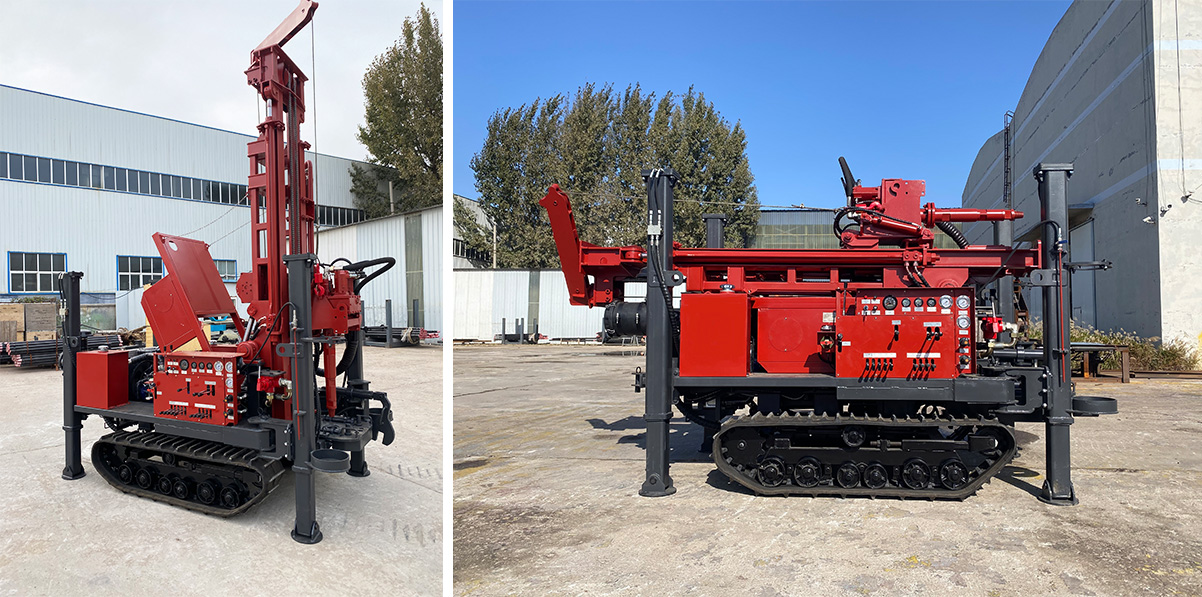
For contractors working in rocky regions, a crawler water well drilling rig equipped for DTH drilling may be worth considering.
Projects Where Drilling Fluid Is Less Desirable
Some projects may benefit from reducing the use of conventional drilling fluids. Air drilling can reduce the need for mud preparation and circulation, provided the formation remains stable and air drilling is technically appropriate.
Fractured Rock Formations
Air drilling may also be considered in certain fractured formations. However, severe water inflow or air loss into fractures can reduce drilling efficiency and create operational challenges.
Contractors should evaluate groundwater conditions and consider suitable techniques such as foam or mist drilling when necessary.
Limitations of Air Drilling
Air drilling is not suitable for every geological condition. Loose sand, gravel, and unstable formations may require casing or other borehole stabilization measures.
High groundwater inflow can also interfere with the removal of cuttings. In addition, compressed air systems require sufficient capacity, and dust, noise, and air discharge need to be managed at the jobsite.
5. When Should You Choose Mud Drilling?
Mud drilling is often considered when borehole stability is a major concern, particularly in loose or unconsolidated formations.
Sand and Clay Formations
Loose sand and clay can cause borehole collapse, wall instability, or other construction problems. Properly selected drilling fluid can help support the borehole walls and transport cuttings to the surface.
Gravel and Mixed Geological Conditions
Some drilling sites contain alternating layers of soil, gravel, clay, and rock. Mud rotary drilling may be appropriate when the drilling fluid can be adjusted to the changing formation conditions.
However, coarse gravel and highly permeable formations may cause significant fluid loss. In these cases, contractors may need additional measures or a different drilling approach.
Deeper Borehole Construction
For deep water well projects, circulating drilling fluid can help maintain cuttings removal throughout the drilling process. Proper fluid properties and circulation management become increasingly important as borehole depth and operational complexity increase.
Limitations of Mud Drilling
Mud drilling requires water, drilling fluid additives, mixing facilities, and a circulation system. Contractors also need to manage used drilling fluid and cuttings in accordance with local environmental requirements.
If drilling fluid is not properly selected and controlled, it may damage water-bearing formations or complicate well development and cleaning. Careful fluid management is therefore essential.
6. How Do Geological Conditions Affect Drilling Method Selection?
Geological conditions are among the most important factors when choosing between air drilling and mud drilling.
Before selecting a drilling method, contractors should review available geological survey information, nearby well records, groundwater levels, and expected formation characteristics.
The following examples provide general guidance:
Hard and stable rock: Air drilling with a DTH hammer may be a suitable option, depending on rock strength, water inflow, and compressor capacity.
Loose sand and clay: Mud rotary drilling may help improve borehole stability and cuttings removal.
Gravel and mixed formations: The choice depends on formation stability, permeability, fluid loss, and the drilling tools available.
Fractured rock with groundwater inflow: Air drilling, foam drilling, mud drilling, or a combination of techniques may be considered according to site conditions.
For projects where geological conditions change significantly with depth, contractors may need to adjust drilling methods during construction rather than relying on a single method throughout the entire well.
7. What Equipment Should Buyers Consider?
When purchasing a water well drilling rig, buyers should evaluate the complete drilling system instead of focusing only on the rig itself.
For air drilling applications, important supporting equipment may include:
An air compressor with suitable pressure and air delivery capacity.
DTH hammers and compatible drill bits.
Drill pipes and connections suitable for the drilling system.
Air hoses, fittings, and necessary safety components.
For mud drilling applications, the required equipment may include:
A compatible mud pump.
Mud mixing and circulation facilities.
Drill pipes and rotary drilling tools.
Drilling fluid additives and mud management equipment.
Other important considerations include the rig's rotation system, feeding and lifting capabilities, power configuration, mobility, maintenance accessibility, and compatibility with the planned borehole diameter and depth.
For B2B buyers, it is particularly important to confirm the complete equipment configuration with the manufacturer before placing an order.
8. How to Choose the Right Drilling Method for Your Project
Before making a purchasing decision, consider these practical questions:
What type of geological formation will the rig encounter?
What is the planned well depth and borehole diameter?
Is the project mainly drilling through hard rock or unconsolidated soil?
Is groundwater inflow expected during drilling?
Is compressed air or drilling fluid more practical at the jobsite?
What supporting equipment is already available?
What are the local requirements for drilling fluid disposal and environmental protection?
Which drilling method offers the best balance between performance and total operating cost?
A professional equipment supplier can use this information to recommend a suitable drilling configuration. In some projects, a drilling system that supports different drilling methods may provide additional flexibility, provided its components are designed for those applications.
9. Find the Right Water Well Drilling Solution
Both air drilling and mud drilling play important roles in deep water well construction. Air drilling is often considered for suitable hard rock formations and DTH applications, while mud drilling is commonly used where drilling fluid can help stabilize the borehole and transport cuttings through loose or mixed formations.
The right choice depends on geology, well design, equipment configuration, and project requirements. Selecting the appropriate drilling method from the beginning can help contractors improve construction planning, control operating costs, and reduce unnecessary downtime.
Puhua Energy Equipment Technology (Shandong) Co., Ltd provides water well drilling equipment solutions for different drilling applications. When selecting a water well drilling rig, buyers should consider not only the rated drilling depth but also the geological conditions, drilling method, and supporting equipment required for the project.
Looking for a suitable water well drilling rig for your next project? Contact Puhua Energy Equipment Technology (Shandong) Co., Ltd and share your target drilling depth, borehole diameter, geological conditions, and preferred drilling method. Our team can help you evaluate suitable equipment configurations for your water well drilling requirements.