What Are the Types of Drilling Rigs?
In the global energy and resource extraction landscape, drilling rigs serve as the backbone of exploration and production operations. From tapping underground oil reservoirs to accessing deepwater natural gas fields, these engineering marvels come in a remarkable variety of configurations, each tailored to specific environments and operational requirements. As the global drilling rig market continues to expand—valued at approximately USD 10.90 billion in 2025 and projected to reach USD 11.57 billion in 2026 with a compound annual growth rate (CAGR) of 6.53%—understanding the different types of drilling rigs has become essential for industry professionals, equipment buyers, and energy stakeholders alike.
This comprehensive guide will walk you through the major categories of drilling rigs, their distinct features, real-world applications, and the technological innovations shaping the industry in 2026. Whether you are sourcing drilling equipment for an upcoming project, expanding your knowledge base, or evaluating supply chain options, this article provides the insights you need to make informed decisions.

Two Major Categories of Drilling Rigs
Drilling rigs are primarily classified into two broad categories based on their operational environment: Onshore Drilling Rigs and Offshore Drilling Rigs. While both share common core components such as derricks, drawworks, and mud circulation systems, each category requires specialized design features to meet the unique challenges of its operating environment.
Onshore (Land) Drilling Rigs
Land drilling rigs are purpose-built for well construction on solid ground. They are deployed across diverse terrains—from desert regions and agricultural plains to mountainous areas and frozen tundra. These rigs range from compact, highly mobile units capable of shallow drilling to massive ultra-heavy structures designed for deep, complex wells.
1. Conventional Land Rigs
Conventional land rigs represent the most common and widely used type of onshore drilling equipment. Typically featuring a derrick or mast, drawworks system, mud pumps, and a rotary table or top drive, these rigs are designed to drill vertical or slightly deviated wells. They are suitable for a broad range of depths and formation types, making them the workhorse of the onshore oil and gas industry.
Within the conventional land rig category, units can be further classified by penetration depth capacity into light duty, medium duty, heavy duty, and very heavy duty rigs, each matched to specific project scales and subsurface challenges.
2. Mobile Drilling Rigs
Mobile rigs prioritize transportability and rapid deployment. These units are mounted on trucks or trailers, allowing quick mobilization between well sites—an essential capability for pad drilling operations in shale plays and other multi-well development projects. Truck-mounted rig series commonly cover drilling depths from 1,000 meters to 4,000 meters, with maximum static loads ranging from 900 kN to 2,250 kN, delivering reliable performance combined with convenient movement and low operating costs.
3. Compact and Heli-Portable Rigs
For operations in restricted spaces, challenging terrain, or remote locations inaccessible by road, compact rigs and heli-portable rigs offer optimal solutions. Heli-portable rigs are broken into modular components that can be transported by helicopter to jungle or mountain sites, where assembly occurs on location. These smaller rigs sacrifice depth capability for unmatched accessibility, making them ideal for exploration drilling in sensitive or logistically constrained environments.
4. Desert Rigs
Specifically engineered for extreme arid conditions, desert rigs incorporate advanced cooling systems, sand filters, and dust control measures to withstand high temperatures and abrasive environments. These rigs are frequently deployed across the Middle East and North Africa (MENA) region, where onshore drilling activity continues to expand.
5. Automated “Walking” Rigs
One of the most innovative recent developments in land drilling is the automated walking rig. These units can move laterally between wellheads without disassembly, significantly reducing non-productive time during pad drilling campaigns. By eliminating the need to tear down and reassemble the rig between wells, walking rigs deliver substantial efficiency gains in multi-well developments.
Offshore Drilling Rigs
Offshore drilling rigs are engineered to operate in marine environments, where water depth, wave action, and harsh weather conditions create formidable engineering challenges. These rigs fall into two primary subcategories: bottom-supported rigs (which rest on the seabed) and floating rigs (Mobile Offshore Drilling Units, or MODUs).
Bottom-Supported Offshore Rigs
1. Jack-Up Rigs
Jack-up rigs feature extendable legs that can be lowered to the ocean floor, elevating the drilling platform above the water surface. These rigs are best suited for shallow water operations up to approximately 120 meters (400 feet) in depth. Jack-ups are self-elevating and typically towed to location, where they jack their legs down to achieve a stable working platform. They are commonly used for exploration drilling, workovers, and temporary production operations in shallow shelf areas.
2. Fixed Platform Rigs
Fixed platform rigs are permanently installed on the ocean floor via steel jacket foundations. These structures are designed for long-term production operations in shallow waters and are typically used in fields where a large number of wells are drilled from a single location. While lacking mobility, fixed platforms offer exceptional stability and are well-suited for ongoing production rather than exploration.
3. Submersible Rigs
Submersible rigs are ballasted to rest on the seabed in very shallow water depths (less than 30 meters). Types include posted barge submersibles, bottle-type submersibles, and arctic submersibles designed for cold-weather operations. These rigs are towed to location and then flooded to settle onto the seabed, providing a stable platform for drilling in swamp areas, inland waterways, and other shallow protected waters.
Floating Offshore Rigs (MODUs)
1. Semi-Submersible Rigs
Semi-submersible rigs are floating structures that remain partially submerged in water using large pontoons and columns. This design provides exceptional stability in rough sea conditions, allowing operations in water depths ranging from 30 meters to over 1,000 meters. Semi-submersibles can be self-propelled or towed and are widely used for deepwater exploration and drilling in harsh-weather environments, including the North Sea and Gulf of Mexico.
2. Drillships
Drillships are ship-shaped vessels equipped with a complete drilling package and dynamic positioning (DP) systems. These rigs offer unparalleled mobility, capable of operating in ultra-deepwater locations down to 3,600 meters (approximately 12,000 feet). Drillships are especially valuable for exploration campaigns requiring rapid mobilization across multiple offshore prospects and for drilling in very deep waters where other MODU types cannot operate.
3. Tension-Leg Platforms (TLP)
TLPs are floating platforms moored to the seabed using vertical tensioned tendons rather than conventional mooring lines. These structures are used for production operations in very deep water (1,000 meters plus) and offer exceptional vertical stability, making them suitable for dry-tree completions.
4. Spar Platforms
Spar platforms consist of large cylindrical structures that float vertically in the water, tethered to the seabed by mooring lines. These designs are employed for drilling and production operations in ultra-deep water depths ranging from 300 to 3,000 meters and are particularly valued for their motion characteristics in harsh sea states.

Drilling Rigs by Application and Industry
Beyond environmental classification, drilling rigs are also distinguished by the industries they serve and the specific tasks they perform.
Oil and Gas Drilling Rigs
The oil and gas sector represents the largest market for drilling rigs, spanning both onshore and offshore operations. These rigs are used not only to identify geologic reservoirs but also to drill the boreholes that enable hydrocarbon extraction. Modern oil and gas rigs can drill to subterranean depths exceeding 12,000 meters, accessing increasingly challenging reservoirs as shallower resources become depleted.
Water Well Drilling Rigs
Specialized water well drilling rigs are designed for accessing groundwater for domestic supply, irrigation, industrial use, and geothermal heating and cooling systems. Common types in this category include rotary drilling rigs, cable tool rigs, auger rigs, and mud rotary rigs, each suited to specific geological formations. The global water well drilling rigs market is projected to grow from USD 194.95 million in 2025 to USD 239.76 million by 2032, reflecting sustained demand for water access infrastructure worldwide.
Mining and Exploration Drilling Rigs
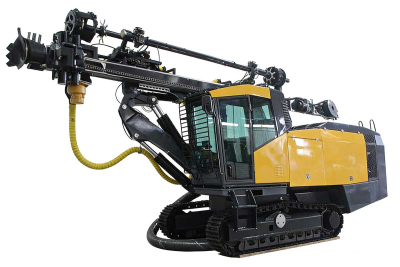
The mining industry extensively utilizes rock drilling rigs for blast-hole drilling, mineral prospecting, and ore extraction. Down-the-hole (DTH) drill rigs—equipped with powerful hammers and air compressors for efficient hard-rock penetration—represent a significant segment of this market. The global hydraulic integrated DTH drill rigs market was valued at USD 955 million in 2024 and is projected to reach USD 1,520 million by 2031, with the mining industry accounting for approximately 59% of total application share.
Directional and Horizontal Drilling Rigs
Directional drilling rigs are specialized units capable of drilling at angles other than vertical. This technique—often employed to reach targets not directly beneath the rig, such as reservoirs located under cities, environmentally sensitive areas, or bodies of water—has become increasingly important in urban oilfield development and extended-reach operations.
Geothermal Drilling Rigs
As the global energy transition accelerates, geothermal drilling has emerged as a growth segment. Specialized rigs designed for geothermal applications are capable of reaching depths of over 800 feet (244 meters) and are equipped with features suited to high-temperature formations and hard-rock environments.
Safety, Regulations, and Environmental Standards
Operational safety and environmental protection remain paramount concerns across the drilling industry. Following the Deepwater Horizon tragedy, the Bureau of Safety and Environmental Enforcement (BSEE) established comprehensive drilling safety rules requiring enhanced standards for casing and cementing, blowout preventer (BOP) capability and testing, third-party certifications, and specific well control training.
International standards such as ISO 18758 specify safety requirements for rock drill rigs and rock reinforcement rigs across underground and surface operations, addressing significant hazards through rigorous equipment inspection and audit protocols. Environmental best practices now mandate oil-spill readiness on every drilling unit, with secondary containment standards requiring containment capacity equal to the largest single tank volume plus freeboard allowances.
Frequently Asked Questions (FAQ)
Q1: What is the difference between onshore and offshore drilling rigs?
Onshore drilling rigs operate on dry land and are typically more mobile and cost-effective for land-based resource extraction. Offshore drilling rigs are designed for marine environments and must withstand wave action, corrosion, and deepwater pressures. Offshore rigs include bottom-supported types (jack-ups, fixed platforms) for shallower waters and floating MODUs (semi-submersibles, drillships) for deep and ultra-deepwater operations. Choosing the right rig type depends critically on water depth, environmental conditions, and project duration.
Q2: What factors should I consider when selecting a drilling rig for a project?
Key factors include: target depth and well complexity (determining required horsepower and hookload capacity), environmental conditions (terrain for land rigs; water depth and sea states for offshore), mobility requirements (fixed vs. transportable), regulatory compliance needs (safety and environmental standards), budget constraints (daily rates and mobilization costs), and application type (oil/gas, water well, mining, geothermal, or geotechnical). A mismatch between rig capability and operational requirements can lead to costly downtime and safety risks.
Q3: What is the average cost of a drilling rig?
Costs vary dramatically by type and specification. Land rig day rates typically range from USD 20,000 to USD 150,000 depending on size and complexity. Offshore rigs command significantly higher rates due to operational complexity and capital intensity. For equipment purchase rather than daily rental, capital costs for a fully equipped drilling rig can range from several million dollars for smaller portable units to hundreds of millions for advanced offshore MODUs and drillships.
Q4: How is AI and automation changing the drilling industry?
AI and automation are transforming drilling operations through real-time subsurface interpretation, automated geosteering, predictive maintenance, and closed-loop control systems. Recent milestones include fully AI-driven geological well placement offshore Guyana, which delivered a 15% faster reservoir section and 33% reduction in tripping time. While fully autonomous drilling remains an emerging capability, advanced automation systems are already delivering measurable improvements in drilling efficiency, safety, and cost reduction.
Q5: What are the most common types of drilling rigs used in water well drilling?
Water well drilling employs several rig types depending on geological conditions. Rotary drilling rigs use a rotating bit to cut through various formations and are the most versatile. Cable tool rigs rely on percussion action and are effective in hard rock but slower. Auger rigs use a helical screw for soft soils and shallow wells. Mud rotary rigs circulate drilling fluid to stabilize the borehole in unconsolidated formations. The choice among these types is dictated by local geology, target depth, and required well diameter.
Conclusion
The drilling rig industry continues to evolve in response to global energy demands, technological innovation, and environmental imperatives. From conventional land rigs and jack-up offshore platforms to AI-enabled drillships and automated walking rigs, the diversity of available equipment ensures that virtually any drilling challenge can be met with the right solution. For procurement professionals, project managers, and energy stakeholders, understanding the distinct capabilities and applications of each rig type is essential for optimizing operational efficiency, controlling costs, and maintaining safety standards.