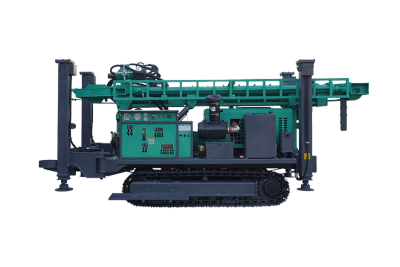
Complete Guide to Down-the-Hole (DTH) Drills
In modern engineering construction and mining operations, the Down-the-Hole (DTH) drill plays an irreplaceable role as a core rock drilling machine. With its scientifically designed structure, this underground drilling equipment efficiently completes various drilling tasks and adapts flexibly to complex working conditions — from hard rock mining to water well drilling and geological exploration.
So how does a DTH drill work? This article provides a systematic breakdown of the DTH drilling working principle, covering basic concepts, operating mechanisms, key advantages, and usage tips — helping you understand why DTH drills are essential for deep hole drilling.

1. What Is a DTH Drill? The All‑Rounder of Underground Drilling
DTH drills are widely used in mining, geological exploration, water well drilling, and other industries. Unlike traditional surface drills, the most distinctive feature of a down‑the‑hole drill is that its hammer and bit operate directly underground, requiring minimal surface space. This DTH drilling method allows the machine to work efficiently in confined areas while significantly improving drilling speed and accuracy, overcoming many limitations of conventional drills in complex environments.
2. Working Principle of a DTH Drill
The efficient and stable operation of a DTH drilling rig relies on the close coordination of several core components — especially the DTH hammer, the drill bit, and the feed system. The down‑the‑hole hammer working principle can be broken down into five key stages:
2.1 Power Source: The Heart of the Equipment
The power source is the foundation of the entire DTH drill rig. Most DTH drills use an internal combustion engine or an electric motor as the primary power source, converting electrical or mechanical energy into rotational force. This drives the drill bit to rotate at high speed, providing the essential power for deep hole drilling operations.
2.2 Drill Bit and Drill Pipe: The Direct Executors
The drill bit is the key component that directly contacts the rock formation and performs rock breaking. Its design must match different geological conditions and drilling depths. To cope with complex and variable underground formations, the bit is typically made of high‑strength alloy to withstand extreme pressure and wear. The drill pipe connects the bit to the drill rig – its length determines the maximum drilling depth, and its strength directly affects operational stability. In DTH drilling, the combination of DTH hammer and bit is crucial for efficient rock fragmentation.
2.3 Cooling and Lubrication: Ensuring Long‑Term Reliability
During drilling, high‑speed friction between the bit and rock generates intense heat. DTH drilling equipment is equipped with a dedicated cooling and lubrication system that injects water or mud as a cooling medium. This rapidly reduces bit temperature and carries away cuttings, preventing overheating and ensuring continuous, reliable operation — one of the advantages of DTH drilling over other methods.
2.4 Feed System: The Regulator of Drilling Depth
The feed system controls drilling efficiency. Its main function is to push the drill bit steadily downward, increasing drilling depth. Most modern down‑the‑hole drilling rigs use a hydraulic feed system that supports automatic feeding and allows adjustable feed rates according to geological conditions. This ensures a stable drilling rhythm whether in hard rock or soft soil, making DTH drilling in hard rock particularly efficient.
2.5 Core Sampling and Cuttings Removal: Ensuring Smooth Drilling and Data Collection
While breaking rock and advancing, a DTH rock drill must also remove cuttings and collect core samples. A dedicated discharge structure extracts cuttings from the borehole to prevent clogging. At the same time, the drill can extract rock samples (core sampling), providing reliable data for geological analysis and resource evaluation — a key feature for geological exploration drilling.

3. Four Key Advantages of DTH Drills
Compared with other drilling equipment, DTH drills offer the following notable benefits, making them suitable for a wide range of applications:
Excellent Drilling Depth – They can reach deep underground, meeting the requirements of deep geological exploration and deep water well drilling.
Strong Environmental Adaptability – They work reliably in hard rock, weathered formations, and soft soil alike. This DTH drilling adaptability is a major selling point.
High Drilling Efficiency – With an effective cooling and lubrication system, they can operate continuously for long periods with low failure rates, which translates to higher productivity in mining and construction.
Environmentally Friendly – They produce small boreholes, causing minimal damage to the surface environment and vegetation, meeting green construction standards. This makes DTH drilling a more sustainable choice.
4. Important Usage Tips for DTH Drills (DTH Drill Maintenance)
To ensure safe and efficient operation and extend equipment life, pay attention to the following three points:
Regular Maintenance – Regularly inspect, clean, and maintain the power source, drill pipe, drill bit, hydraulic system, and other core components. Replace worn or damaged parts in time. Proper DTH drill maintenance prevents costly downtime.
Proper Operator Training – Operators should receive systematic training on the working principle, operating procedures, and safety regulations to avoid equipment failure or accidents due to improper operation. Understanding how to operate a DTH drill correctly is essential.
Environmental Monitoring – When working near ecologically sensitive areas or residential zones, monitor the surrounding environment in real time and take effective protective measures to prevent contamination from slurry or cuttings.
5. Conclusion
Thanks to its unique down‑the‑hole hammer working principle, outstanding performance, and wide environmental adaptability, the Down‑the‑Hole drill has become an indispensable piece of equipment in modern drilling. It not only drives efficient development in mining, geological exploration, water well drilling, and other industries but also provides solid support for various underground engineering projects.
A deep understanding of how DTH drilling works helps operators use the equipment correctly, improve efficiency, reduce risks, and supports technological upgrading in related industries — all while meeting the diverse needs of modern engineering construction. Whether you are looking for DTH drilling solutions for mining or water well drilling with DTH rigs, this technology offers unmatched reliability and performance.