How to Precisely Choose Your Next Core Drill Rig Amidst Global Mining Recovery
In the fields of resource exploration and geological surveying, the core drill rig is an indispensable piece of core equipment. With the steady recovery of global mineral exploration activities and the growing demand for resources from deeper, complex strata, efficient, reliable, and highly adaptable drilling equipment is becoming a focal point for international buyers. Choosing a suitable core drill rig is not only crucial for the success of an exploration project but also directly impacts long-term operational costs and return on investment. This article will systematically analyze the key factors in selecting a core drill rig, assisting you in making informed decisions in the international market.
I. Industry Background & Market Trends: Why the Choice Matters More Than Ever
Currently, global exploration investment is shifting from traditional shallow, simple ore bodies towards targets in deep exploration and under complex geological conditions. According to data from authoritative mining institutions, exploration spending for critical minerals (such as lithium, cobalt, rare earths) is projected to grow at an annual rate of over 8% in the next five years. This trend directly drives the demand upgrade for high-performance core drill rigs. The market shows two clear trends: firstly, rising demand for automated and intelligent drill rigs to enhance operational safety and data acquisition precision; secondly, a preference for equipment with versatility and modular design for rapid deployment and maintenance in remote and harsh environments.
Therefore, modern core drill rig selection for exploration is far from a simple price comparison; it is a professional decision requiring comprehensive consideration of technical parameters, engineering compatibility, and total lifecycle cost.

II. Five Core Considerations for Choosing a Core Drill Rig
1. Exploration Target & Geological Conditions
Drilling Depth & Hole Diameter: These are the most basic technical parameters. Define your project's maximum drilling depth and required core diameter (e.g., HQ, PQ). Deep-hole drilling (e.g., over 1000 meters) requires a deep-hole core drill rig with high torque and high feed pressure.
Rock Hardness & Formation Complexity: For different formations like hard, fractured, or soft water-bearing strata, choose a model with corresponding speed range, feed control precision, and mud pumping capacity. For complex formations, top-drive core drill rigs hold an advantage due to their superior maneuverability and ability to handle downhole incidents.
2. Power & Drive Type
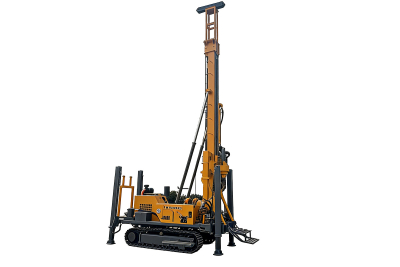
Diesel Drive: Powerful, suitable for remote areas without grid power, and is the mainstream choice for field exploration drill rigs.
Electric Motor Drive: Lower operating cost, less noise, environmentally friendly, suitable for mining areas with stable power supply or urban engineering survey projects.
Hydraulic System Efficiency: Advanced hydraulic systems provide smooth, precise power output, directly impacting drilling efficiency and core recovery rate.
3. Technical Advancement (Automation & Intelligence)
Automation Features: Such as automatic rod handling devices and digital drilling parameter control systems, can significantly reduce labor intensity, increase pure drilling time, and ensure operator safety.
Data Acquisition & Navigation: Rigs integrated with Measurement While Drilling (MWD) interfaces can acquire real-time data like hole deviation and azimuth, which is crucial for directional drilling and precision exploration.
4. Mobility & Deployment Convenience
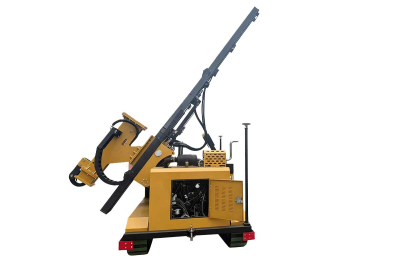
Choose crawler-mounted, truck-mounted, or trailer-mounted core drill rigs based on the worksite (mountains, jungle, desert). Modular-designed rigs that can be disassembled and sling-loaded by helicopters greatly expand exploration reach.
5. Manufacturer Strength & Full Lifecycle Support
Choose a reputable core drill rig manufacturer. Their product quality, R&D capability, and global after-sales service network are the guarantees for long-term, stable equipment operation. Assess whether they provide comprehensive operator training, timely spare parts supply, and professional technical support.
III. Brief Description of Product Manufacturing & Application Process
The manufacturing of a high-quality core drill rig begins with rigorous engineering design and material selection. The main structure uses high-strength alloy steel to ensure rigidity; core hydraulic components and power systems undergo strict testing and matching.
In the core drilling application process, the rig sends a core barrel fitted with a diamond bit underground via drill rods. Under the combined action of rotation and feed, the bit cuts the rock formation, forming a cylindrical core which is captured inside the core barrel. The rods are then retrieved to bring up the core, providing geologists with the most direct subsurface geological information sample. This entire process requires extremely smooth equipment operation to protect the core's original structure and integrity.

IV. Buyer FAQs
Q1: For small and medium-sized companies newly entering the exploration field, how to choose a cost-effective core drill rig?
A: It is advisable to first define the target depth (often starting within 500 meters as a common baseline) and primary rock types of your main exploration projects. Choose a technologically mature, highly reliable medium-to-shallow hole hydraulic core drill rig. Prioritize manufacturers offering flexible financial solutions and localized technical support to control initial investment and operational risks.
Q2: Why is there a significant price difference among rigs with the same depth capacity?
A: Price differences mainly stem from: brand of core components (e.g., hydraulic pumps, engines), steel quality & manufacturing工艺, technical configuration (level of automation), brand premium, and the scope of after-sales services. A rig utilizing fully imported key components and equipped with semi-automation and advanced control systems may have a higher initial cost but could offer better Total Cost of Ownership in the long run through higher efficiency and lower failure rates.
Q3: What are the special requirements for drill rigs operating in areas with strict environmental regulations?
A: Focus on: 1) Low-noise design (e.g., silent power packs); 2) Leak-proof design (enclosed hydraulic system, leak-proof fuel tanks); 3) Compatibility with efficient mud circulation and waste management systems. Electric or hybrid-powered rigs are ideal choices for such regions.
Q4: When purchasing, what key elements should warranty and after-sales service include?
A: The standard warranty period should cover the entire machine and core components. Key services include: on-site installation, commissioning & training; operation & maintenance manuals; commitment to timely spare parts supply (with clear delivery times for critical parts); remote fault diagnosis support; and optional定期保养 service packages. Be sure to specify service response times and terms clearly in the contract.
Faced with a multitude of equipment options, partnering with a provider who truly understands your exploration challenges is vital. As a professional drilling solutions provider with years of industry experience, we can not only offer you a complete series of core drill rigs from shallow to ultra-deep hole but also provide personalized equipment selection analysis and total lifecycle cost simulations based on your specific project budget and geological reports.
Contact our international sales engineering team now to receive a complimentary "Core Drill Rig Selection Technical Advisory Report" tailored to your exploration plan, along with our latest product catalog. Let our professional technical insights help you pinpoint success in global resource exploration and drill into the future.