Types and Working Principles of Water Well Drilling Rigs
The Importance of Water Well Drilling Rigs in Modern Water Resource Development
With the increasing demand for groundwater resources in agricultural irrigation, industrial water supply, rural drinking water projects, and infrastructure construction, water well drilling rigs have become essential equipment for underground water exploration and development. Compared with traditional manual drilling methods, modern water well drilling rigs offer higher drilling efficiency, more stable operation, and stronger adaptability, allowing operators to complete shallow wells, deep wells, and complex geological drilling projects.
For international buyers, understanding the types and working principles of water well drilling rigs is important for selecting the right equipment, improving construction efficiency, and reducing operating costs. This article provides a detailed introduction to different types of water well drilling rigs, their operating processes, and how to choose the most suitable drilling equipment for different applications.
1. What Is a Water Well Drilling Rig?
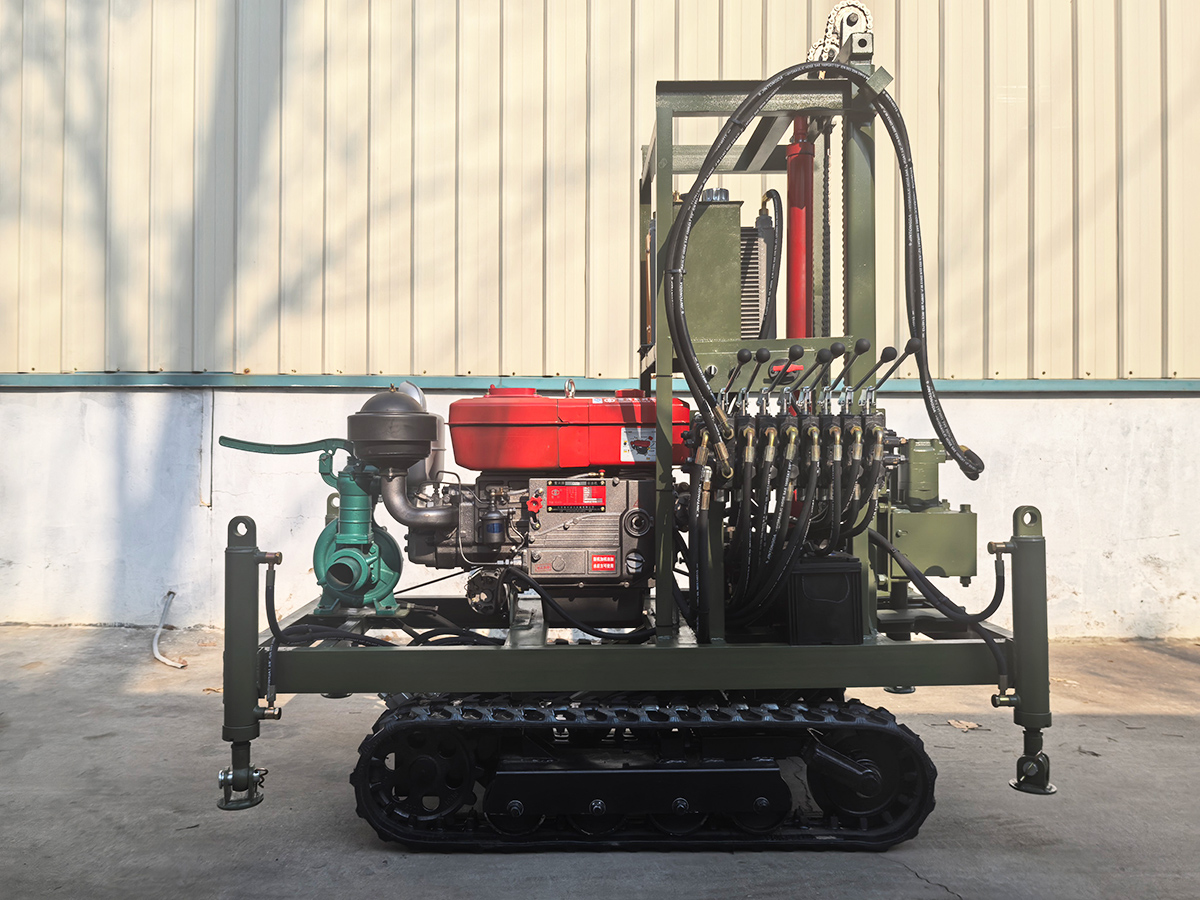
A water well drilling rig is specialized equipment designed for drilling underground water wells. It uses power systems to drive drill rods and drilling tools, allowing drill bits to rotate, impact, or perform combined movements to break underground soil and rock formations. At the same time, drilling debris is removed from the borehole, gradually forming a complete water well.
A modern water well drilling rig usually consists of several key systems:
Power System: Provides the required energy for drilling operations, including diesel engines, electric motors, or hydraulic power systems.
Hydraulic System: Controls drilling, rotation, lifting, and feeding operations to ensure stable performance.
Drilling System: Includes drill rods, drill bits, and down-the-hole hammers, which are responsible for breaking geological formations.
Traveling System: Uses crawler tracks or wheels to move the equipment efficiently between job sites.
Circulation and Mud System: Removes drilling cuttings through air, water, or drilling mud circulation.
Different types of water well drilling rigs use different drilling methods according to geological conditions, drilling depth, and construction environments.
2. Main Types of Water Well Drilling Rigs
Based on structure, mobility, and drilling technology, water well drilling rigs can be divided into several major categories.
1. Small Water Well Drilling Rig
A small water well drilling rig features a compact structure, flexible operation, and easy transportation. It is widely used for rural water supply, agricultural irrigation, and small-scale construction projects.
Main advantages include:
Compact size and small working area requirement;
Easy transportation and installation;
Simple operation and low maintenance cost;
Suitable for drilling depths of approximately 80–200 meters depending on geological conditions.
For remote areas where large drilling equipment is difficult to transport, small water well drilling rigs provide an effective solution for domestic water supply and agricultural irrigation.
In regions such as Africa and Southeast Asia, small drilling rigs are widely used to develop groundwater resources for rural communities, farms, and plantations.
2. Tracked Water Well Drilling Rig
A tracked water well drilling rig uses a crawler chassis, providing excellent mobility and ground adaptability in challenging environments.
Key advantages include:
Suitable for mountains, muddy areas, deserts, and uneven terrain;
Strong self-propelled capability without additional transportation equipment;
High stability during drilling operations.
Tracked drilling rigs are commonly used for:
Agricultural irrigation wells;
Geological exploration projects;
Mining area water supply;
Remote groundwater development.
Because crawler tracks reduce ground pressure, these machines perform especially well in soft soil and difficult terrain conditions.
3. Wheeled Water Well Drilling Rig
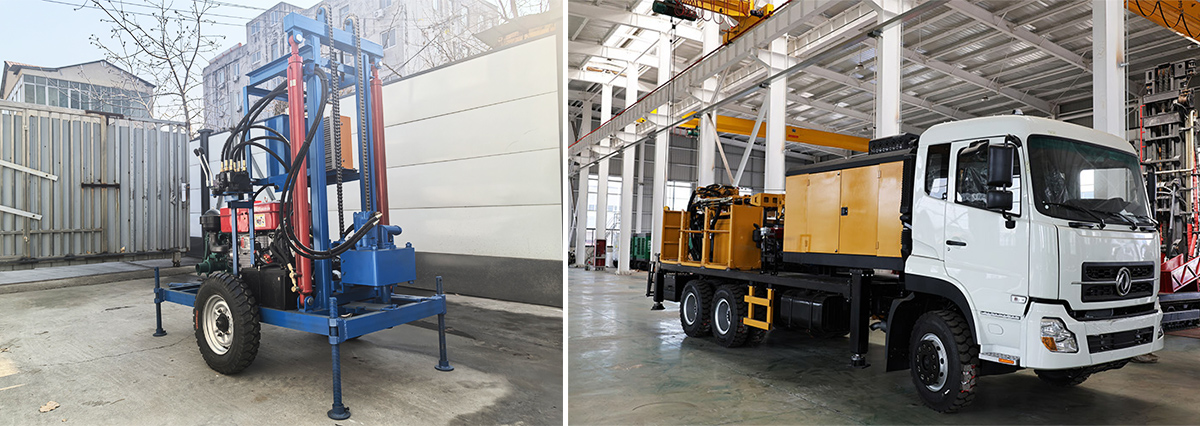
A wheeled water well drilling rig is designed with a wheel-based chassis, providing fast transportation and strong mobility.
Main applications include:
Urban construction projects;
Multiple-site drilling operations;
Large-scale water well development.
Compared with tracked models, wheeled drilling rigs are more suitable for areas with better road conditions where frequent movement between construction sites is required.
4. Truck Mounted Water Well Drilling Rig
A truck mounted water well drilling rig integrates the drilling system onto a truck chassis and is widely used in large-scale drilling projects.
Main features:
Fast transportation speed;
Strong drilling capability;
Large power capacity;
Suitable for deep water well construction.
Truck mounted drilling rigs are commonly applied in:
Large agricultural irrigation projects;
Industrial water supply systems;
Municipal water projects;
Deep groundwater exploration.
5. Hydraulic Water Well Drilling Rig
A hydraulic water well drilling rig is an advanced type of drilling equipment that uses hydraulic systems to control drilling operations.
Compared with traditional mechanical drilling rigs, hydraulic models provide:
More stable power output;
Faster drilling speed;
More accurate operation control;
Higher automation levels.
The hydraulic system allows operators to adjust drilling pressure according to different formations, improving drilling efficiency and adaptability in complex geological conditions.
3. Working Principles of Water Well Drilling Rigs
The basic working process of a water well drilling rig includes drilling, cutting removal, lifting, and circulation.
1. Power Transmission and Drill Rod Rotation
First, the engine generates power, which is transferred to the drilling system through hydraulic or mechanical transmission.
The drill rod rotates the drill bit at high speed, allowing it to continuously cut and break underground soil and rock layers.
Different drill bits are selected according to geological conditions:
Alloy drill bits: Suitable for soft soil formations;
Three-wing drill bits: Effective for clay and sand layers;
PDC drill bits: Designed for harder formations;
DTH hammers: Used for rock drilling applications.
2. Breaking Underground Rock Formations
After entering the ground, the drill bit breaks geological formations through rotation, impact, or combined drilling methods.
For example:
Soft soil layers mainly rely on rotary cutting;
Hard rock formations require impact drilling force.
Modern water well drilling rigs can adjust rotation speed, drilling pressure, and impact frequency to achieve efficient drilling performance under different conditions.
3. Removal of Drilling Cuttings
During drilling operations, large amounts of rock fragments and soil cuttings are generated. Efficient removal of these materials is essential to maintain drilling performance.
Common cutting removal methods include:
Air Circulation
High-pressure air is used to lift drilling debris from the bottom of the borehole. This method is commonly used in rock formations.
Mud Circulation
Drilling fluid carries cuttings to the surface while helping stabilize the borehole walls.
Water Circulation
Water flow cools the drill bit and removes cuttings, making it suitable for certain soft formations.
4. Well Completion Process
After reaching the designed drilling depth, additional well completion work is required, including:
Installing well pipes;
Adding filter layers;
Well cleaning;
Water quality testing.
These processes ensure the final water well operates efficiently and provides a stable water supply.
4. How to Choose the Right Water Well Drilling Rig?
When purchasing a water well drilling rig, several factors should be considered.
1. Select According to Drilling Depth
Different drilling projects require different equipment:
Shallow water wells: Small water well drilling rigs are suitable;
Medium-depth wells: Tracked or hydraulic drilling rigs are recommended;
Deep wells: Truck mounted drilling rigs are more suitable.
2. Select According to Geological Conditions
Different formations require different drilling technologies:
Soil and sand layers: Rotary drilling equipment;
Rock formations: DTH drilling rigs;
Complex formations: Multifunctional hydraulic drilling rigs.
3. Select According to Working Environment
For remote areas with poor road conditions, tracked water well drilling rigs are recommended due to their excellent mobility.
For projects requiring frequent transportation between multiple locations, truck mounted or wheeled drilling rigs can provide higher efficiency.
5. Future Development Trends of Water Well Drilling Rigs
With increasing global demand for water resources, water well drilling technology is developing toward higher efficiency, intelligence, and multifunctional operation.
Future drilling rigs will focus on:
Automated control technology;
Energy-saving and environmentally friendly power systems;
Intelligent fault monitoring;
Faster installation and maintenance.
Professional drilling rig manufacturers continue to optimize equipment design and improve drilling performance to provide reliable groundwater development solutions for customers worldwide.
As an essential equipment for underground water development, water well drilling rigs play a vital role in agriculture, industry, rural water supply, and construction projects. Understanding different types of water well drilling rigs and their working principles helps buyers select the most suitable equipment for their specific applications.
Puhua Energy Equipment Technology (Shandong) Co., Ltd. is a professional drilling equipment manufacturer specializing in water well drilling rigs, including small water well drilling rigs, tracked water well drilling rigs, and hydraulic drilling rigs. The company is committed to providing efficient, stable, and cost-effective drilling solutions for customers worldwide.
Whether for rural water supply projects, agricultural irrigation, or large-scale engineering construction, choosing the right water well drilling rig can significantly improve drilling efficiency and ensure reliable groundwater development.