Key Differences Between Rotary Drilling Rigs and Vibratory Hammer Pile Drivers
Rotary drilling rigs and vibratory hammer pile drivers are two essential pieces of piling equipment widely used in global construction projects. While both serve the core purpose of foundation piling, they differ significantly in terms of working principles, application scopes, operation methods, construction efficiency, and cost-effectiveness. Understanding these differences is crucial for international contractors, project managers, and engineers to select the most suitable equipment for specific project requirements, ensure construction quality, and optimize project schedules. This article details the main distinctions between the two types of equipment to provide practical guidance for overseas construction projects.
1. Working Principles
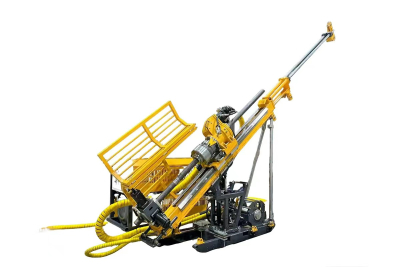
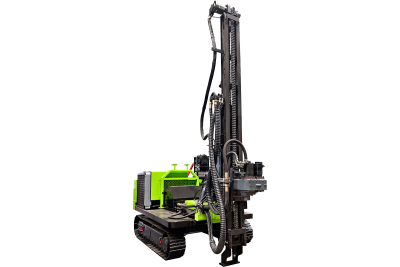
Rotary drilling rigs are advanced, high-efficiency piling machines that rely on a combination of rotational force and hydraulic pressure to achieve hole formation. Equipped with a powerful rotary power head, the rig drives the drill bit to rotate at high speed, cutting and breaking through soil and rock formations. At the same time, hydraulic cylinders apply downward pressure to the drill bit, enhancing drilling efficiency and ensuring the stability of the hole. The cuttings (drill slag) generated during drilling are lifted to the ground by a winch system, either through a bucket drill bit (for soil layers) or a core drill bit (for rock layers), completing the hole-forming process in a continuous and efficient manner. This principle ensures minimal disturbance to the surrounding stratum and high hole quality.

In contrast, vibratory hammer pile drivers operate based on high-frequency vibration technology. The machine’s vibrator generates high-frequency, low-amplitude vibrations (usually 1000-3000 vibrations per minute), which are transmitted to the pile body. These vibrations reduce the friction
between the pile and the surrounding soil, loosening the soil particles around the pile and significantly lowering the resistance to pile sinking. The pile is then driven into the ground by the combined force of the vibrator’s vibration and the self-weight of the pile and pile tube. For pile extraction, the vibrator reverses its operation to loosen the soil again, and the winch lifts the pile out of the ground. Unlike rotary drilling rigs, vibratory hammer pile drivers do not form holes independently but drive prefabricated piles (such as steel piles, concrete piles) into the stratum directly.
2. Application Scopes
Rotary drilling rigs are highly versatile and suitable for hole formation in almost all types of strata, making them ideal for a wide range of international construction projects. They perform excellently in cohesive soil, sandy soil, gravel soil, pebble layers, and even hard rock formations (when equipped with special rock drill bits). In addition to conventional pile foundation construction (such as bored piles for high-rise buildings, bridges, and industrial plants), rotary drilling rigs are also widely used in the construction of diaphragm walls, underground parking lots, subway stations, and foundation pits. Their ability to drill deep holes (up to 100 meters or more) and large-diameter holes (up to 3 meters) makes them particularly suitable for large-scale, high-standard projects in urban and industrial areas.
Vibratory hammer pile drivers, on the other hand, are mainly suitable for soft soil and sandy soil strata. They are less effective in cohesive soil (due to high soil viscosity, which reduces the vibration loosening effect) and cannot penetrate hard rock formations at all. Their primary application scenarios include coastal areas, riverbanks, and reclamation projects (where soft soil and sand are common), as well as temporary foundation projects (such as temporary support piles for construction sites) and lightweight structure foundations (such as small bridges, retaining walls, and solar panel brackets). They are also widely used in port and wharf construction, where prefabricated piles need to be driven into shallow to medium-deep soft soil strata efficiently.
3. Operation Methods & Automation Level
Rotary drilling rigs feature a high degree of automation, making their operation relatively simple and easy to master, even for less experienced operators. Modern rotary drilling rigs are equipped with advanced control systems, including GPS positioning, depth measurement, and torque monitoring, which allow operators to precisely control the drill bit’s direction, depth, and rotational speed. The entire drilling process can be operated through a centralized control panel, reducing manual intervention and improving construction accuracy and efficiency. Additionally, many models are equipped with automatic slag discharge systems, further reducing labor intensity and ensuring continuous operation.
Vibratory hammer pile drivers require more professional skills and experience from operators. The key to successful operation lies in adjusting the vibrator’s frequency and amplitude according to the stratum conditions and pile type. For example, in loose sandy soil, a higher frequency is needed to quickly loosen the soil, while in slightly cohesive soil, a lower frequency with larger amplitude may be required to overcome soil viscosity. Operators must also closely monitor the pile’s sinking speed and verticality to avoid pile tilting or damage. Although some modern models are equipped with basic control systems, the overall automation level is lower than that of rotary drilling rigs, and the operation effect is more dependent on the operator’s experience.
4. Additional Key Differences
Construction Efficiency
Rotary drilling rigs have high drilling efficiency in most strata, especially in medium-hard soil and rock formations. For deep and large-diameter holes, they can complete hole formation in a short time, significantly shortening the construction period. However, their efficiency may decrease in extremely soft soil or soil with high water content, as it may cause hole collapse (requiring additional measures such as casing support).
Vibratory hammer pile drivers excel in soft soil and sandy soil, where they can drive piles quickly (often several piles per hour). Their efficiency is much higher than that of rotary drilling rigs in these specific strata. However, in strata with high soil viscosity or gravel content, their efficiency drops sharply, and they may even be unable to complete pile driving.
Construction Quality & Environmental Impact
Rotary drilling rigs produce high-quality holes with smooth walls, accurate depth and diameter, and minimal disturbance to the surrounding stratum. This ensures the stability of the pile foundation and is suitable for projects with high quality requirements (such as high-rise buildings and long-span bridges). However, they generate a certain amount of drill slag, which requires proper disposal to avoid environmental pollution.
Vibratory hammer pile drivers cause minimal soil disturbance compared to impact pile drivers, but the vibration generated during operation may affect nearby buildings and structures (especially in urban areas). Therefore, they are not suitable for construction near sensitive buildings (such as historical buildings, hospitals, and residential buildings). Additionally, the verticality of the driven piles is highly dependent on the operator’s skill, and improper operation may lead to pile inclination.

Cost & Maintenance
Rotary drilling rigs are high-investment equipment with a higher initial purchase price and maintenance cost. They require regular maintenance of the power head, hydraulic system, and drill bits (especially rock drill bits, which are prone to wear). However, their high efficiency and versatility can reduce the overall project cost in large-scale, long-term projects.
Vibratory hammer pile drivers have a lower initial purchase price and simpler structure, resulting in lower maintenance costs. They are more cost-effective for small to medium-sized projects, temporary projects, or projects concentrated in soft soil strata. However, their limited application scope may increase costs if the project involves complex strata (requiring additional equipment).
Conclusion
Rotary drilling rigs and vibratory hammer pile drivers each have their unique advantages and limitations. Rotary drilling rigs are versatile, high-efficiency, and suitable for complex strata and large-scale projects, making them the first choice for high-standard foundation construction. Vibratory hammer pile drivers are cost-effective, efficient in soft soil strata, and ideal for temporary projects and projects with simple stratum conditions. When selecting equipment for overseas construction projects, it is essential to comprehensively consider factors such as stratum conditions, project scale, construction quality requirements, and budget. Consulting professional equipment suppliers and engineers can help ensure the most suitable equipment is chosen, maximizing construction efficiency and reducing project risks.