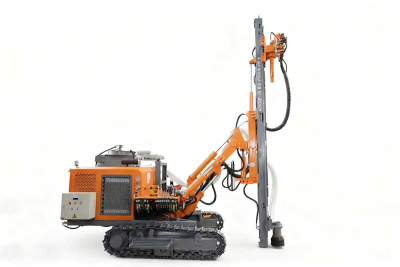
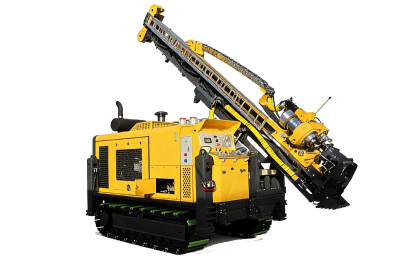
Wheeled water well drill
In many parts of the world—from the arid farmlands of sub-Saharan Africa to the remote villages of Southeast Asia and the sprawling agricultural plains of South America—access to clean groundwater remains a critical challenge. For contractors, farmers, and drilling service providers in these regions, a reliable and efficient wheeled small water well drilling rig has become an indispensable tool for solving water scarcity issues while maintaining project profitability.
This buying guide draws from real field experience in international markets and focuses on a proven, diesel-powered wheel-mounted solution equipped with a branded diesel engine, industrial-grade radiator, and self-contained mud pump system—offered by Puhua Energy Equipment Technology (Shandong) Co., Ltd.

Why Choose a Wheel-Mounted Small Water Well Drilling Rig?
When it comes to selecting drilling equipment for international projects, the choice between wheel-mounted, crawler, or truck-mounted configurations largely depends on terrain conditions and budget constraints.
The wheel-type water well drilling rig is the top choice for contractors working with limited funds or projects in flat areas, making it a popular affordable borehole machine for Africa and South America. Unlike bulkier models, wheel-mounted rigs can be towed between job sites by standard pickup trucks or tractors, eliminating the need for expensive specialized transport vehicles. This makes them ideal for contractors who operate across multiple small towns or rural areas where quick mobility and low initial investment are key to profitability.
Compared with traditional fixed rigs, a small well drilling rig is more flexible, especially suitable for areas with poor road conditions and for multi-location projects.
Key Factors to Consider When Selecting Your Rig
Whether you are purchasing for a small agricultural cooperative, a rural water supply project, or a commercial drilling business, the following considerations will help you make the right choice.
1. Drilling Depth and Diameter Requirements
The first and most important criterion is understanding your project’s technical specifications. For shallow to medium-depth wells up to 150 meters, a wheel-mounted diesel rig is fully capable. If the construction depth is within 150m, many models on the market can reliably complete the task.
Drilling diameter is equally important. Typical small rigs handle diameters from 75mm to 325mm, with 90–220mm being the most common range for borehole applications. Larger diameters require higher torque and more robust power systems.
2. Power System and Fuel Type
For remote field operations where electricity is unavailable, diesel power remains the most practical solution. A brand diesel engine provides ample power with good fuel efficiency, ideal for long-term continuous operation. The electric start feature, powered by a reliable battery system, makes operation easier even in cold weather conditions.
Beyond the engine itself, pay attention to the cooling system. An industrial-grade radiator ensures stable operating temperatures during extended drilling sessions, preventing overheating and downtime in hot climates—a common challenge in Middle Eastern and African field conditions. The self-contained mud pump is another critical component; it effectively cools the drill bit and removes cuttings during drilling, improving drilling efficiency and extending bit life.
3. Hydraulic System and Drilling Capabilities
A well-designed hydraulic system significantly boosts penetration efficiency. Modern wheel-mounted rigs feature dual-pump hydraulic systems that generate high pressure, improving drilling speed.
The ability to support multiple drilling methods is a major advantage. For clay and sand layers, mud rotary drilling with a mud pump handles the job efficiently. For harder rock formations, down-the-hole (DTH) air drilling mode allows the rig to tackle bedrock conditions. This dual-mode capability—seamless switching between mud circulation and air DTH—gives contractors the flexibility to adapt to changing geological conditions without investing in separate equipment.
4. Mobility and Transportability
Total machine weight and wheel chassis design determine how easily the rig can be relocated. Look for models with a three-wheel or four-wheel trailer configuration that can be towed by standard vehicles. Machines weighing around 2 to 3 tons offer a good balance between stability during drilling and ease of transport.
For operations in sandy or rugged terrain, features like adjustable hydraulic support legs provide excellent stability on uneven surfaces, including slopes and muddy ground. Each hydraulic tubing should be equipped with a protective jacket for extended service life in harsh field conditions.

5. Operational and Maintenance Costs
The total cost of ownership goes far beyond the purchase price. Fuel consumption, maintenance costs, spare parts availability, and operator training all factor into long-term profitability. Wheel-mounted diesel rigs generally have lower operational costs compared to crawler or truck-mounted alternatives, with simpler systems that local technicians can maintain without specialized training.
The rig chosen must be minimal in operational cost and higher on profit margins. Additionally, companies that offer training manuals, operation videos, and responsive technical support are likely trustworthy manufacturers who will help further the success of your business.
6. After-Sales Service and Technical Support
For international buyers, after-sales support is arguably as important as the equipment itself. Look for a company that supports its customers, even after the sale. Manufacturers of discounted rigs might not be around long or won't be there to help you with questions or issues after the sale. Instead, choose a manufacturer known for their after-sale support and resources.
In many ways, the export capability of Shandong’s water well drilling rig industry has been remarkable—with products successfully delivered to Europe, the United States, Russia, Southeast Asia, Africa, and beyond. This international track record speaks volumes about the quality and reliability of Chinese-made drilling equipment.
Global Application Scenarios
Wheel-mounted small water well drilling rigs are serving diverse needs across international markets:
Rural Domestic Water Wells: Solving drinking water problems for residents in remote African villages where municipal water systems are unavailable.
Agricultural Irrigation: Providing stable water sources for farms, orchards, and greenhouses across Southeast Asia and South America.
Livestock Watering: Supplying water to pastureland in arid regions like Namibia and northern Kenya.
Small-scale Engineering Wells: Supplying water for concrete mixing and dust suppression at construction sites.
Geothermal Air Conditioning Holes: Supporting energy-efficient HVAC installations in residential and commercial buildings.
Why Source from Shandong, China?
Shandong Province, particularly the city of Jining, has established itself as one of China's premier manufacturing hubs for drilling equipment. The region benefits from a complete industrial ecosystem—from steel fabrication and hydraulic component manufacturing to engine assembly and final testing. This concentration of expertise translates into competitive pricing, shorter lead times, and mature quality control systems.
Featured Product: Puhua Energy Wheel-Mounted Water Well Drilling Rig
At Puhua Energy Equipment Technology (Shandong) Co., Ltd., we understand the unique challenges faced by drilling contractors in emerging markets. Our wheel-mounted small water well drilling rig is specifically engineered for portable borehole drilling applications, combining rugged reliability with cost-effective operation.

Key Features Include:
Diesel-Powered Efficiency: Equipped with a brand diesel engine (available in 22HP, 32HP, or higher configurations depending on model), delivering ample power with good fuel efficiency.
Industrial Radiator Cooling System: Maintains optimal operating temperatures even in high-heat environments, preventing overheating during extended drilling sessions.
Self-contained Mud Pump: Standard mud pump system effectively cools the drill bit and removes cuttings, improving drilling efficiency and extending bit life.
Dual Drilling Mode Support: Capable of both mud rotary drilling for soft formations and air down-the-hole (DTH) drilling for rock layers.
Wheel-Mounted Mobility: Towable by ordinary pickup trucks or tractors, with four independently adjustable hydraulic support legs for stability on uneven surfaces.
Full Hydraulic System: Hydraulic transmission provides high torque at low rotation speeds, with real-time adjustment capability for propulsion speed and lifting speed to adapt to various drilling conditions.
Electric Start: Simple and reliable starting mechanism for daily operation.
Hydraulically Raised Mast: With a hydraulic compensation mechanism to improve stability and load-bearing capacity during operation.
Technical Specifications: Drilling depth up to 150 meters, drilling diameter 90–254mm, machine weight approximately 3 tons, travel speed around 3 km/h, climbing angle up to 30°.
Our company is located in the Jining High-tech Zone, Shandong Province, China. We are committed to providing high-quality geological exploration and water well drilling equipment for international clients. All our products are backed by comprehensive after-sales support, including technical training, spare parts supply, and remote troubleshooting.

Conclusion: Making Your Decision
Choosing the right wheel-mounted small water well drilling rig comes down to a clear understanding of your project needs: required depth, typical geological conditions, budget constraints, and logistics capabilities. Beyond the initial investment, look for a manufacturer who stands behind their product with reliable after-sales support.
At Puhua Energy Equipment Technology (Shandong) Co., Ltd., we don't just sell machines—we provide drilling solutions. With decades of combined industry experience and a deep understanding of international market requirements, we are ready to help you select the right equipment for your specific conditions. Contact us today for a customized quote and discover how our wheel-mounted water well drilling rig can transform your drilling operations.
FAQ
1.What's the price? Can you give me a quote?
The price really depends on the exact configuration – engine power, whether you need an air compressor, and what spare parts you want. Just tell us your target drilling depth, the common ground conditions in your area, and whether you need an air compressor. Then we can send you a detailed spec sheet and a proper quote. For the latest pricing, just contact our sales team.
What kind of vehicle do I need to tow this rig?
A regular pickup truck, SUV, or tractor will do the job. The tow hitch is a standard 50mm ball coupling, or we can customize it for you if needed. We recommend a towing vehicle with at least a 1.5L engine, and make sure your tow bar is safety certified.
2.Do you have customer cases in Africa / South America / Southeast Asia?
Yes, we do. Our equipment has been exported to Africa (Tanzania, Kenya, Nigeria), Southeast Asia (Philippines, Indonesia, Myanmar), South America (Brazil, Peru), the Middle East, Europe, and more. We can share photos or videos of our machines working on real sites over there – while protecting our customers' privacy, of course.
3.Is it complicated to operate? Do you provide training?
It's fairly simple – one person can handle the daily work. We'll provide an operation manual (both Chinese and English) and training videos. We can also arrange remote video guidance. For daily maintenance, just change the oil on time, clean the filters, and check the hydraulic hoses – that's basically it.
4.What engine do you use? Can the cooling system handle high temperatures?
We use a branded diesel engine – typically Changchai, Weichai, or equivalent brands, with options of 22HP, 32HP, or higher. We also equip it with an industrial-grade radiator, so even in hot regions like the Middle East or Africa, it won't overheat after 4–6 hours of continuous drilling. All engines come with electric start.