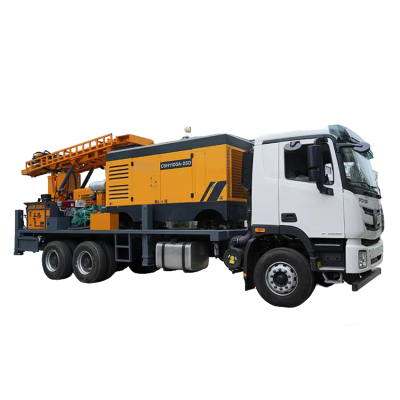
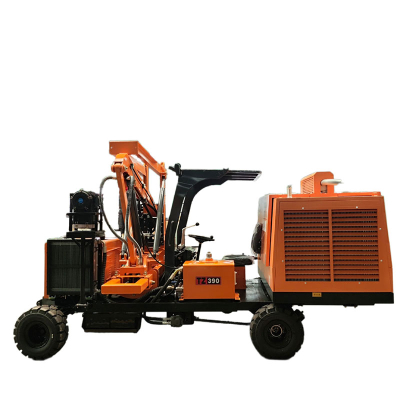
Complete Guide to Selecting Solar Pile Drivers
In solar power plant construction, the solar pile driver is an indispensable piece of core equipment. It directly affects the quality of pile foundations, construction progress, and the overall stability of the project. However, with so many types of solar pile drivers on the market, newcomers to the solar construction field often feel confused: how do you choose the one that best fits your project? Today, we provide a comprehensive and practical guide to solar pile drivers.
1. Core Differences and Suitable Users for Three Main Types of Solar Pile Drivers
Common solar pile drivers on the market fall into three main categories: auger (spiral) pile drivers, diesel hammer pile drivers, and vibratory pile drivers. They differ significantly in working principles, performance, application scenarios, and target users.
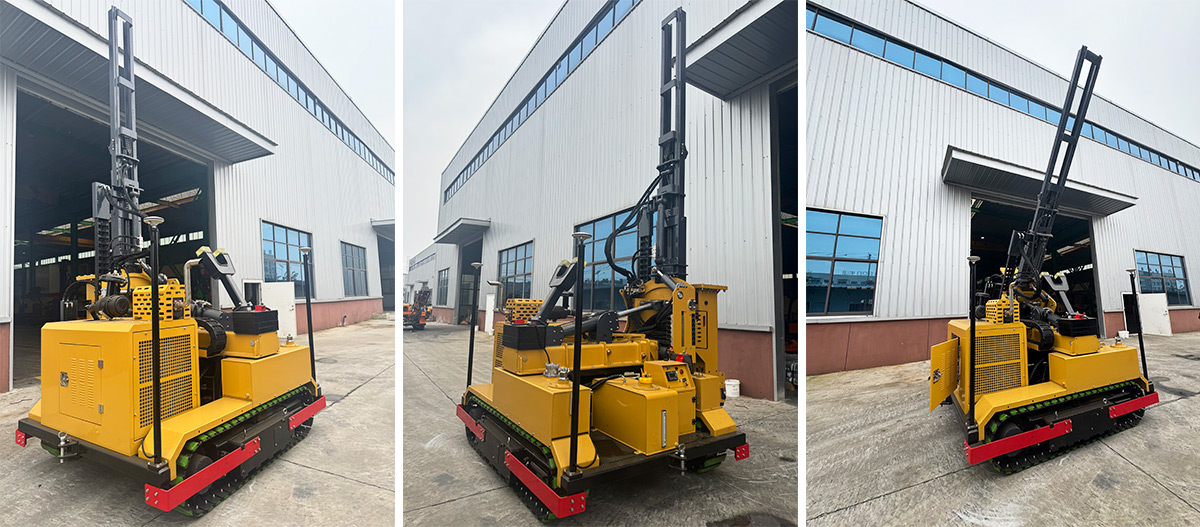
1. Auger (Spiral) Pile Driver
Working Principle
An auger pile driver uses a rotating helical blade to cut into the soil and remove the earth, forming a hole and driving the pile.
Key Advantages
High pile quality with good control over verticality and penetration depth, ensuring foundation stability.
Strong adaptability to various ground conditions, especially soft soil layers.
Relatively simple operation, friendly to beginners.
Suitable Scenarios and Users
Ideal for small-scale solar power plant construction and for teams or operators new to solar pile driving. If you want easy operation and high pile accuracy, the auger pile driver is an excellent choice.
2. Diesel Hammer Pile Driver
Working Principle
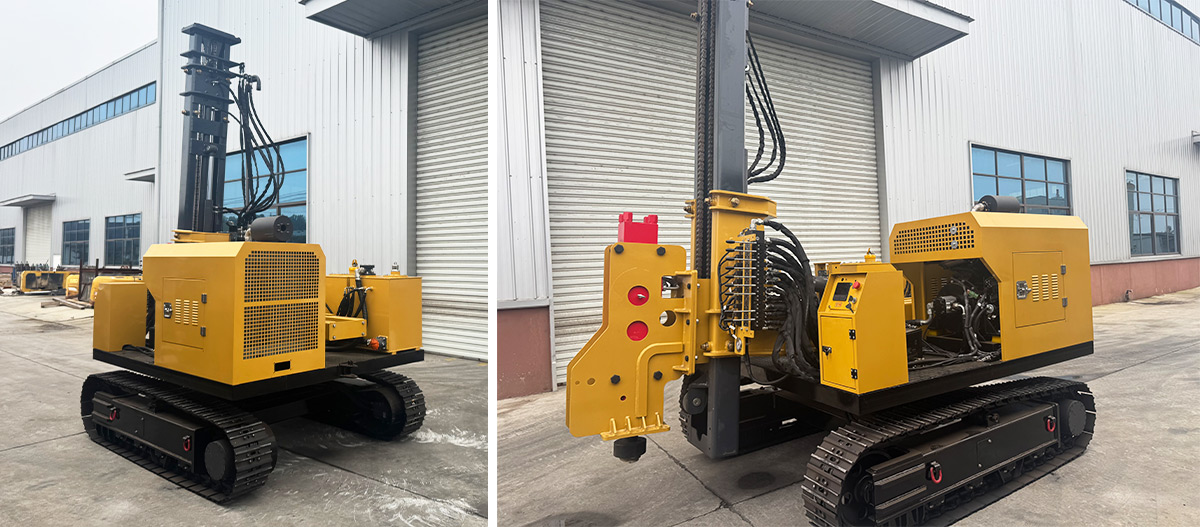
It uses the impact force generated by diesel combustion explosion to drive the pile directly into the ground.
Key Advantages
Very fast construction speed, extremely efficient for single-machine operation.
Particularly suitable for large solar projects with tight deadlines.
Considerations
Generates high noise during operation, which may affect the surrounding environment.
Before use in urban areas, residential zones, or noise-sensitive locations, environmental requirements must be carefully assessed.
Suitable Scenarios and Users
Best for experienced construction teams with strong resource management capabilities. For large-scale projects with tight schedules and sites far from sensitive areas, a diesel hammer pile driver can significantly improve overall construction efficiency.
3. Vibratory Pile Driver
Working Principle
A vibratory hammer produces high-frequency vibrations that liquefy the soil around the pile, reducing friction resistance and allowing the pile to sink quickly into the ground.
Key Advantages
Simple operation and fast construction speed.
Relatively low noise, good environmental performance.
Suitable for various ground conditions including sand, silt, and clay.
Suitable Scenarios and Users
Ideal for projects with strict noise and vibration requirements, such as distributed solar plants near residential areas, schools, or hospitals. For companies or teams that prioritize green and environmentally friendly construction, the vibratory pile driver is the best choice.
2. Four-Step Selection Process: Practical Tips from Needs to Decision
To help you make an informed decision among many products, we have summarized a clear, actionable selection process.
Step 1: Accurately Assess Ground Conditions
Different ground conditions require very different pile driver capabilities.
Soft soil foundation: Prioritize an auger pile driver for high pile quality and reduced risk of hole collapse.
Hard soil, gravel layers, or rock layers: Choose a more powerful machine with greater penetration capability, such as a heavy diesel hammer or a high-power vibratory driver.
Mixed ground conditions: A vibratory pile driver often offers good adaptability.
Step 2: Consider Project Scale and Schedule
Small solar projects (e.g., a few MW on commercial rooftops or small ground-mounted plants): Choose a simple, low-cost, easy-to-maintain model – the auger pile driver is a typical option.
Large ground-mounted solar farms (tens or hundreds of MW): Focus on construction efficiency, continuous operation capability, and stability. Diesel hammer and large vibratory drivers are more suitable.
Extremely tight deadlines: The high speed of a diesel hammer pile driver is a major advantage, but you must weigh noise management costs.
Step 3: Prioritize Equipment Quality and Brand Reliability
Pile drivers are high-intensity construction equipment – quality and reliability directly affect project progress and safety.
Prefer brands with a good reputation and significant market share.
Carefully review technical specifications and the quality of core components (engine, hydraulic system, vibratory hammer, etc.).
Read genuine user reviews and case studies, not just promotional materials.
Understand the after-sales service network and spare parts availability – especially important for projects in remote areas.
Step 4: Compare Total Cost and Long-Term Value
Price is important, but it should never be the only deciding factor.
Within your budget, consider performance, reliability, after-sales service, fuel or electricity consumption, and maintenance costs.
Avoid chasing the lowest price, as frequent breakdowns and low efficiency may cost you more in the long run.
Ask suppliers for a trial or short-term rental to verify equipment performance before purchasing.

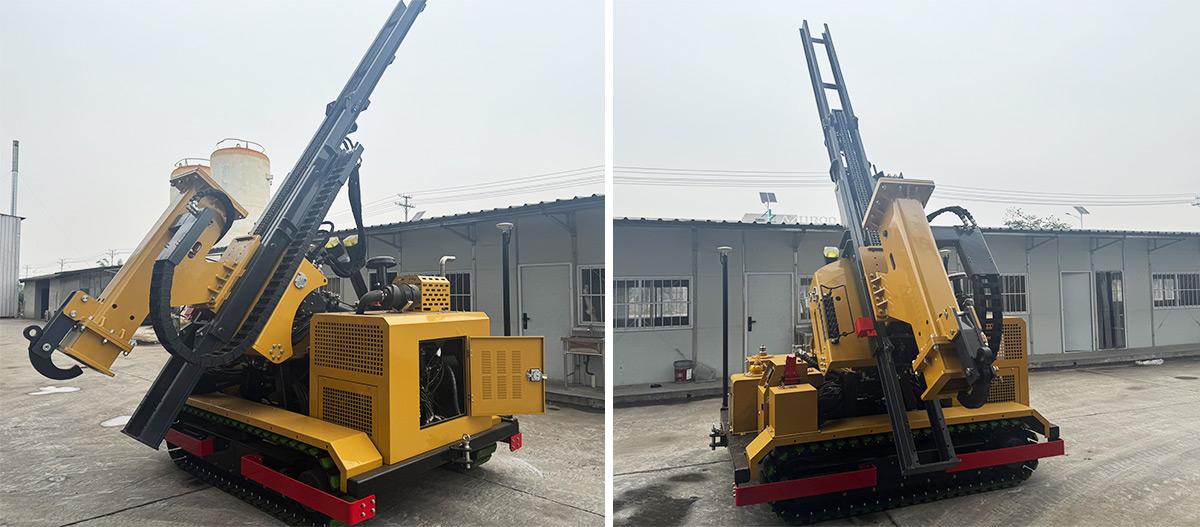
3. Real-World Experience: Lessons from an Auger Pile Driver
The author once participated in the construction of a small ground-mounted solar power plant. The site was on soft soil, with about 2,000 piles required. The team was small, and several operators were new. After comprehensive evaluation, we chose an auger (spiral) pile driver.
During construction, the following points left a deep impression:
Low learning curve: Even operators with no previous pile driving experience could independently handle basic positioning and driving after half a day of training, significantly reducing training costs.
High positioning accuracy: The auger pile driver precisely controlled pile verticality and depth. Every pile was placed accurately according to design coordinates, providing a reliable foundation for subsequent solar rack installation.
Excellent performance in soft soil: In soft ground conditions, pile quality was very high, with almost no hole collapse or deviation. The foundations were stable and reliable.
Of course, the auger pile driver has a limitation – it is slower than a diesel hammer driver. For a large-scale project covering thousands of acres with a very tight schedule of only one or two months, we might have considered mixing or switching to more efficient models. But for a small project, its overall performance was more than satisfactory.
This real experience confirms once again: There is no single "best" pile driver – only the one best suited to your project.
Conclusion
Choosing a solar pile driver is not about finding the "best" model – it is about finding the "right" model for your specific project. Ground conditions, project scale, schedule, environmental requirements, your team’s experience level, and budget all influence the final decision.
We hope this detailed analysis, step‑by‑step selection guide, and real‑world case study help you avoid common mistakes, choose the right equipment, and start your solar project smoothly. If you have further questions about solar pile drivers or want to compare specific models, please stay tuned for our future content.
Efficient construction begins with the right choice.