How to Choose a 300m Water Well Drilling Rig
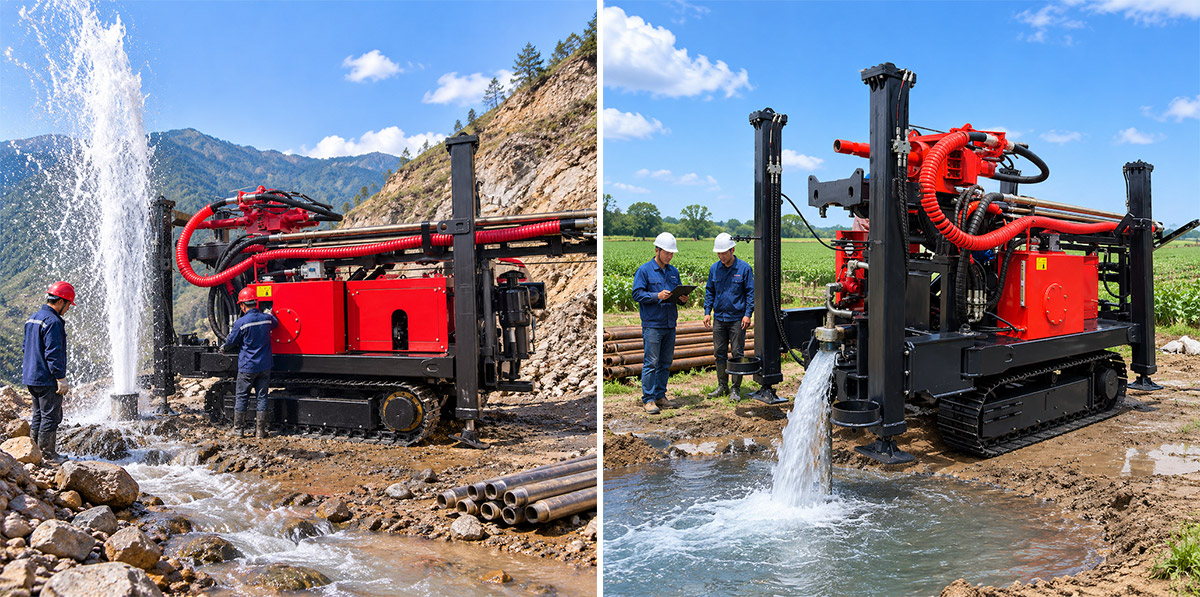
Choosing the right 300m water well drilling rig is an important investment for drilling contractors, agricultural businesses, and groundwater development companies. A suitable deep well drilling machine should not only meet the required drilling depth but also match local geological conditions, borehole diameter, drilling methods, and project requirements.
For buyers planning deep water well construction, selecting the right equipment can improve operational efficiency, reduce unnecessary costs, and support long-term business development. However, a machine's rated drilling depth alone does not determine its overall performance. Buyers should evaluate the complete drilling system and its compatibility with the intended application.
This guide explains the key factors to consider when purchasing a 300m water well drilling rig and how to identify equipment that meets your project's needs.
1. Confirm the Required Drilling Depth
Drilling depth is usually the first specification buyers consider when selecting a water well drilling machine.
A 300m water well drilling rig is designed for projects that require drilling capabilities within its verified operating range. It may be considered for agricultural irrigation wells, rural water supply, industrial groundwater development, and commercial drilling projects.
Before purchasing, determine the actual target depth of your well. Consider not only the expected depth of the first project but also the requirements of future jobs.
Important questions include:
- What is the planned depth of the water well?
- Will different projects require different drilling depths?
- Is the equipment expected to work close to its maximum rated depth?
- Does the required borehole diameter affect the achievable drilling depth?
A drilling rig's rated depth should always be checked against the manufacturer's technical specifications and the conditions under which that rating is established. Borehole diameter, drill pipe configuration, geological formations, and drilling methods can all influence actual drilling capability.
Choosing a machine with suitable capacity helps avoid investing in equipment that is either insufficient for the project or unnecessarily oversized.
2. Understand the Geological Conditions
Geological conditions have a significant impact on drilling efficiency, equipment selection, and construction costs.
A 300m deep well drilling machine may encounter different formations during a single drilling operation. These may include soil, sand, clay, gravel, weathered rock, fractured rock, and hard rock.
Soft Soil and Clay Formations
Loose soil and clay can create borehole stability challenges. Depending on the site, drilling fluid and casing may be required to prevent borehole collapse and maintain stable drilling conditions.
For these projects, buyers should evaluate the rig's compatibility with mud rotary drilling and the supporting circulation system.
Sand and Gravel Formations
Sand and gravel formations may present challenges related to borehole stability, water loss, and cuttings removal.
The drilling method, drilling fluid properties, and casing arrangements should be selected according to the formation characteristics.
Hard Rock Formations
Hard rock drilling may require specialized tools and suitable drilling methods. Down-the-hole (DTH) hammer drilling is commonly considered for appropriate rock formations.
Buyers planning to drill through hard rock should confirm whether the water well drilling rig can work with compatible DTH hammers, drill bits, drill pipes, and air compressors.
Understanding the geological conditions before purchasing helps ensure that the selected deep well drilling equipment is suitable for the actual jobsite.
3. Select the Right Drilling Method
Different drilling methods are suitable for different geological conditions. A 300m water well drilling rig should be selected according to the drilling process required by the project.
Mud Rotary Drilling
Mud rotary drilling uses circulating drilling fluid to transport cuttings out of the borehole. The fluid can also help stabilize borehole walls, cool drilling tools, and control fluid circulation.
This method is commonly considered for soil, sand, clay, and certain mixed formations.
When choosing a rig for mud rotary drilling, buyers should check its compatibility with the mud pump, circulation system, drill pipes, and drilling tools.
Air Drilling
Air drilling uses compressed air to remove drilling cuttings from the borehole. It is often considered for suitable hard rock formations and DTH drilling applications.
A suitable air drilling system requires an air compressor with sufficient pressure and air delivery capacity, as well as compatible drilling tools.
Air drilling may not be appropriate for every formation, particularly where loose materials, severe groundwater inflow, or borehole instability create operational challenges.
Before purchasing a 300m water well drilling rig, buyers should discuss the intended drilling method with the manufacturer and confirm the complete equipment configuration.
4. Check the Main Technical Specifications
The rated drilling depth is important, but it should never be the only factor used to evaluate a deep well drilling machine.
The following technical specifications deserve particular attention.
Drilling torque and rotation speed
These specifications influence the rig's ability to operate different drilling tools and work through various formations. Buyers should check whether the rotation system matches the planned drilling method and borehole requirements.
Feed force and lifting capacity
The feeding and lifting systems affect how the machine handles drill pipes and performs drilling operations. These capabilities should be suitable for the expected drilling depth and drill string configuration.
Drill pipe compatibility
Drill pipe length, diameter, connection type, and strength influence the overall drilling system. Confirm that the drill pipes are compatible with the rig and suitable for the intended well depth.
Power system
The engine or motor configuration should meet the requirements of the complete drilling system. Buyers should also consider fuel availability, maintenance requirements, and operating conditions in the destination country.
Supporting equipment
A complete drilling solution may require mud pumps, air compressors, DTH hammers, drill bits, water hoses, and other accessories. Confirm which components are included in the quotation and which need to be purchased separately.
Evaluating these specifications together provides a more accurate understanding of the equipment's actual capabilities.
5. Consider Machine Structure and Mobility
The working environment is another important factor when selecting a 300m water well drilling rig.
Different jobsite conditions may require different machine configurations.
Crawler-Mounted Drilling Rigs
Crawler water well drilling rigs are often considered for construction sites where ground conditions are uneven or access is limited.
Their tracked structure can help the machine move around suitable jobsite terrain. This configuration may be useful for agricultural projects, rural water supply construction, and remote drilling locations.
Truck-Mounted Drilling Rigs
Truck-mounted water well drilling rigs combine drilling equipment with a vehicle chassis. They may be suitable for projects requiring frequent transportation between different drilling locations, provided road access and transportation conditions are appropriate.
When comparing crawler-mounted and truck-mounted equipment, buyers should consider transportation costs, site accessibility, ground conditions, installation requirements, and the frequency of relocation.
6. Evaluate Maintenance and Operating Costs
The purchase price is only one part of the total investment in a 300m water well drilling rig.
Long-term operating costs can have a major influence on project profitability. Before placing an order, buyers should evaluate:
- Fuel or energy consumption.
- Routine maintenance requirements.
- Availability and cost of replacement parts.
- Drill bit and drill pipe replacement frequency.
- Operator training and labor requirements.
- Mud pump or air compressor maintenance.
- Transportation and installation expenses.
- Technical support and warranty coverage.
A machine that is easy to maintain and has accessible spare parts can help reduce downtime.
For drilling contractors operating in different countries, after-sales support and the availability of technical assistance are especially important. Buyers should ask manufacturers about maintenance guidance, spare parts supply, and warranty conditions before making a final decision.
7. Match the Rig to Your Project Application
A 300m water well drilling rig may serve different types of groundwater development projects.
Agricultural irrigation:Farms and agricultural businesses may require deeper wells to support irrigation systems and water supply. Equipment should be selected according to local geology, water requirements, and well design.
Rural water supply: Rural water projects may involve different terrain, geological conditions, and transportation challenges. Mobility and reliable equipment operation are important considerations.
Industrial groundwater projects:Industrial applications may require specific well diameters, drilling depths, and construction standards. Buyers should provide detailed project information before selecting equipment.
Drilling contractors: Contractors serving multiple customers may benefit from equipment configurations that support a wider range of project requirements. Future workload and the types of formations commonly encountered should be considered.
Matching the equipment to the actual application helps improve utilization and avoid unnecessary investment.
8. Questions to Ask a Water Well Drilling Rig Manufacturer
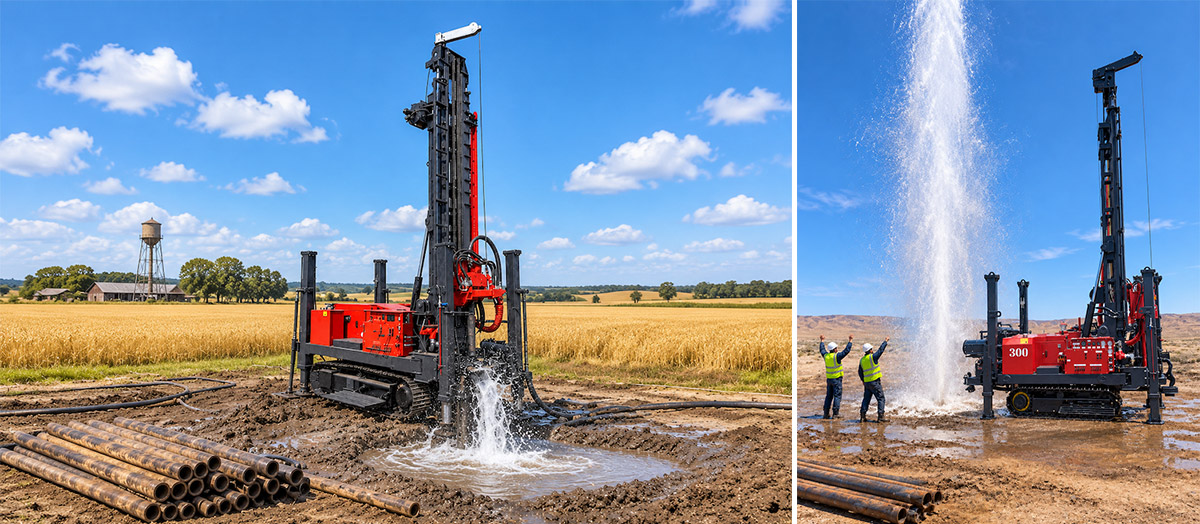
Before purchasing a 300m water well drilling rig for sale, buyers should communicate with the manufacturer and request detailed technical information.
Consider asking the following questions:
1. Under what conditions can the machine achieve its rated drilling depth?
2. What borehole diameter range does the equipment support?
3. Which drilling methods are compatible with the rig?
4. What drill pipes and drilling tools are required?
5. Are the mud pump or air compressor included in the quotation?
6. What are the transportation dimensions and machine weight?
7. What maintenance and spare parts support is available?
8. What warranty terms and technical assistance are provided?
A reliable water well drilling rig manufacturer should be able to explain the machine configuration, clarify technical limitations, and help buyers evaluate whether the equipment matches their project requirements.
Providing the supplier with geological information, target depth, borehole diameter, and intended drilling method can make the recommendation more accurate.
9. Choose a Reliable 300m Water Well Drilling Rig Supplier
Selecting the right supplier is just as important as choosing the right machine. Buyers should consider manufacturing experience, product quality, technical communication, equipment configuration, and after-sales support.
Puhua Energy Equipment Technology (Shandong) Co., Ltd provides water well drilling equipment solutions for different project requirements. When evaluating a 300m deep well drilling machine, buyers can discuss their drilling conditions and application needs with the company to identify a suitable equipment configuration.
A well-matched drilling rig can support efficient construction, reliable operation, and long-term business development.
Looking for a 300m water well drilling rig for your next project? Contact Puhua Energy Equipment Technology (Shandong) Co., Ltd and share your target drilling depth, borehole diameter, geological conditions, and preferred drilling method. Our team can help you evaluate suitable water well drilling equipment for your project and business requirements.