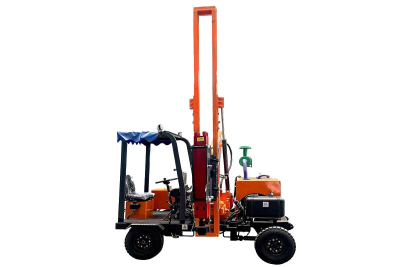
How to Choose a Solar Pile Driver
Why is everyone asking about solar pile drivers?
Solar power has been growing fast in recent years. By 2024, total installed capacity worldwide had exceeded 1.5 terawatts (TW), and it could double again by 2030. With so many solar farms to build, digging holes and setting piles by hand just doesn't work anymore. That’s why a specialized machine — the solar pile driver — has become essential.
Don’t underestimate this machine. A 1 MW solar farm needs roughly 80 to 120 piles. For a project over 100 MW, you’re looking at tens of thousands of piles. If the piles are not driven properly, the支架 (mounting structures) won’t be level, the panels will be unevenly stressed, and at best you lose efficiency — at worst, the whole system deforms after a few years. So choosing a reliable solar pile driver is a real concern for many international buyers.
Below, based on real project experience, we’ll look at the different types of pile drivers, how to choose according to site conditions, and the most common issues buyers face.

Market data
According to industry research, the global solar piling equipment market was about $14.5 billion in 2024, and is expected to grow at 9.2% per year through 2032. The reasons are simple:
Good flat land is getting scarcer. New projects are moving to hillsides, sandy areas, and even water. This puts higher demands on a pile driver’s climbing ability and positioning accuracy.
Environmental rules in Europe and North America are getting stricter. Traditional diesel hammer rigs are harder to get onto sites in some places. Low‑emission or even zero‑emission models are becoming a plus point when bidding for projects.
In short, in the past you mainly looked at how powerful a pile driver was. Now you also need to ask: can it work on slopes, and can it pass environmental checks?
Three main types of solar pile drivers – what are their strengths?
There are many models on the market, but the real differences come down to three things: power source, impact method, and undercarriage.
| Type | Power source | Best for | Advantages |
| Full hydraulic crawler pile driver | Diesel engine + hydraulic system | Large ground‑mount farms, hilly terrain, hard soil | High impact (up to 1300 J or more), high efficiency |
| Electric / solar‑assisted static pressure pile driver | Battery + solar panel | Environmentally sensitive areas, deserts, near residential zones | Quiet, zero emissions, saves fuel over time |
| Crawler auger drill | Hydraulic motor | Sandy soil, soft soil, or rock layers where you need to drill and pour concrete | Clean holes, good for large‑diameter cast‑in‑place piles |
How to choose? Just look at the soil.
If your site has hard clay or weathered rock, go straight for a full hydraulic pile driver. This type has strong impact force and can drive H‑beam or C‑section piles steadily without deviating.
If you are in a desert area like the Middle East or North Africa, or in an ecologically sensitive zone in South America, consider a solar‑assisted static pressure pile driver. During the day there is plenty of sunlight to charge the battery, then the machine uses hydraulics to press the pile into the ground. There is no impact noise, and less risk of getting stuck – getting stuck in the desert is much more trouble than driving piles.

Four key specifications to watch – you won’t go wrong
Many first‑time buyers of solar pile drivers don’t know what really matters. These four things determine how efficiently and how well the machine works.
1. Impact frequency and impact energy
These decide how many piles you can drive per day. A good machine has an impact frequency of 450–800 bpm (blows per minute) and single‑blow energy of 1300 J or more. Only then can it drive a 6‑meter steel pile to the required depth.
2. Mast stroke and sliding range
Solar pile foundations require very high vertical accuracy. A good pile driver should have a mast stroke of at least 4 meters, and the slide rail should be able to move 200 mm left and right. This is very useful when adjusting pile positions on site.
3. Undercarriage and climbing ability
Solar farms are large, and the machine has to move around a lot. Crawler tracks are the first choice because they have low ground pressure and don’t get stuck easily in muddy conditions. Climbing ability should be at least 25–35 degrees – otherwise the machine won’t go up even a modest slope.
4. Positioning assistance system
Some higher‑end models now come with GPS or BeiDou navigation. The operator sits in the cab and sees the exact location of each pile point on a screen, then automatically aligns the hammer. On a site with thousands of pile positions, this feature saves a huge amount of manual layout and tape‑measuring time.
How does a solar pile driver work – from arrival to completion?
Take a typical 100 MW solar farm as an example. The process goes like this.
Step 1: Arrival on site
The pile driver is delivered by flatbed trailer. It drives off the trailer by itself, turns on the tracks, and moves directly to the first row of piles.
Step 2: Aligning and leveling
The operator uses a remote control or joystick in the cab to adjust the mast’s vertical alignment. Better machines now have built‑in level sensors, with data shown on a screen – no need to run around with a spirit level.
Step 3: Driving or drilling
For an auger model, drill first and remove soil. For an impact model, the hydraulic hammer drives the precast pile into the bearing layer step by step. This step requires a skilled operator.
Step 4: Inspection and move to the next pile
After driving one pile, check the top elevation and verticality. If it passes, move to the next pile. A high‑efficiency crawler full hydraulic pile driver can easily drive 300 piles in a day.

Frequently Asked Questions (FAQ)
Q1: Solar‑powered vs diesel‑powered – how to choose?
It depends on the project location and schedule.
If your project is in Europe or North America, where carbon emissions are strictly regulated, a solar‑assisted pile driver not only meets environmental requirements but also helps you stand out in bidding. The machine costs a bit more, but you save on fuel in the long run.
If your project is in Africa, Southeast Asia, or Latin America, where the power grid is unstable and the schedule is tight, go with a diesel hydraulic pile driver. It’s tough and reliable, and easier to find local repair services when something goes wrong.
Q2: Can I buy a used pile driver? What should I watch out for?
Yes, but be careful. Solar pile drivers are high‑wear machines. Pay special attention to three things:
Has dust entered the hydraulic system? Solar sites are very dusty. Once hydraulic components wear out, repairs are expensive.
How worn are the crawler tracks? Machines move around a lot on site – the undercarriage often wears out faster than the engine.
Is the impact system weakened? A used hammer may only deliver 70–80% of its original force. You won’t know without testing it on the ground.
Ask the seller for a third‑party inspection report, or at least a video of the machine driving a pile.
Q3: How do you keep piles straight when working on a slope?
This is the biggest headache for mountain solar projects. When choosing a machine, check whether it has mast sliding and fine‑adjustment capability.
In simple terms, even if the machine itself is tilted (normally up to 15 degrees is allowed), the mast can be adjusted back to vertical using hydraulic cylinders. That way the pile goes in straight, not tilted like the machine. Without this function, the machine is basically unusable on slopes.

Final words
Choosing the right solar pile driver is not just buying a machine – it’s laying the foundation for your construction schedule over the next few months, and for the entire power plant’s operational life of several decades. Don’t just look at the price, and don’t be distracted by fancy features. Find out what kind of soil you have, how steep the slopes are, and how strict the environmental rules are. Then compare the key specs we discussed above. Chances are you won’t make a bad choice.