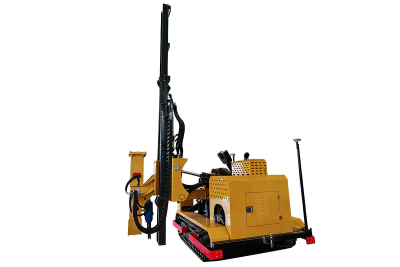
Mini Hydraulic Water Well Drill Rig
Introduction: Meeting the Growing Demand for Groundwater Access
The global water crisis continues to intensify. Rising populations, prolonged droughts, and depleting surface water sources have made groundwater access a critical priority across every continent. According to the World Meteorological Organization, over 50% of global catchments experienced below-normal river discharge in 2024, pushing communities, farmers, and industries to rely increasingly on underground aquifers.
For drilling contractors, agricultural operations, and rural development projects, the challenge is clear: how to access groundwater efficiently, cost-effectively, and in locations where traditional large-scale drilling equipment cannot reach. This is where the mini hydraulic water well drill rig emerges as a game-changing solution.
Compact yet powerful, these rigs combine the mobility of rubber tracks with the precision of hydraulic drilling systems. They are designed to navigate narrow paths, soft farmland, and rugged terrain—bringing water well drilling capabilities to sites that were previously inaccessible or too costly to develop.
This article explores the market trends driving demand for mini hydraulic water well drill rigs, the technical features that make them indispensable, and why B2B buyers worldwide are turning to these compact drilling solutions for their water well projects.

Market Overview: A Growing Industry
Global Water Well Drilling Market Size and Projections
The water well drilling industry is experiencing robust growth. The Global Water Well Drilling Rig Market is projected at USD 557.55 million in 2025 and is expected to reach USD 750.15 million by 2033, growing at a compound annual growth rate (CAGR) of 3.78%. The broader Water Well Drilling Equipment Market is even larger, projected to expand from USD 6.05 billion in 2025 to USD 8.41 billion by 2031, reflecting a CAGR of 5.64%.
The portable water well drilling rig segment—which includes mini hydraulic models—is valued at approximately USD 187.9 million in 2025 and is expected to reach USD 248.52 million by 2033. This segment is growing at a steady CAGR of 3.56%, driven by increasing demand for compact, mobile drilling solutions that can operate in remote and challenging environments.
Key Market Drivers
Several factors are fueling the demand for mini hydraulic water well drill rigs:
1. Freshwater Scarcity and Climate Change
Climate anomalies have diminished surface water reliability across the globe. Prolonged drought conditions, particularly in regions like the western United States, have driven a surge in water well drilling activity. Farmers and rural communities are increasingly investing in private groundwater systems to secure their water supply.
2. Agricultural Irrigation Needs
Agriculture accounts for over 40% of global groundwater extraction. As surface water becomes less reliable, farmers are turning to well drilling to irrigate crops. Mini hydraulic water well drill rigs are particularly suited for farm irrigation projects due to their ability to navigate fields and operate in soft, muddy conditions.
3. Rural Development and Infrastructure Investment
Governments worldwide are channeling capital into rural water infrastructure. The U.S. Environmental Protection Agency allocated over USD 3 billion to states for water infrastructure upgrades in 2024. Similarly, the Asian Development Bank provided a USD 200 million loan for water supply improvements in India, explicitly including new tube wells.
4. Urbanization and Industrial Demand
Rapid urbanization demands deeper, more efficient drilling operations due to depleting water tables in urban areas. Industrial applications, construction dewatering, and geothermal energy projects also contribute to growing demand.
Regional Growth Hotspots
North America currently holds the largest market share in the water well drilling industry, driven by infrastructure investments and a growing reliance on private water systems. However, the fastest-growing regions are in Asia-Pacific and Africa, where developing economies are investing heavily in water infrastructure to support population growth and agricultural development.
Technical Overview: The Mini Hydraulic Water Well Drill Rig
What Is a Mini Hydraulic Water Well Drill Rig?
A mini hydraulic water well drill rig is a compact, mobile drilling machine designed to bore holes into the ground to access underground water sources. These rigs typically feature a hydraulic power system, a drilling mast, rotary or percussion drilling mechanisms, and supporting equipment for mud circulation and cuttings removal.
What sets the mini hydraulic water well drill rig apart is its combination of compact size, hydraulic power, and rubber track mobility. Unlike larger truck-mounted rigs, these machines can access tight spaces, operate on soft terrain, and be transported with minimal logistical effort.
Key Technical Specifications
Mini hydraulic water well drill rigs are available in a range of configurations to suit different project requirements. Typical
| Parameter | Typical Range |
| Drilling Depth | 100m – 270m |
| Drilling Diameter | 70mm – 350mm |
| Power Source | Diesel engine (15HP – 76KW) |
| Hydraulic System Pressure | Up to 100 bar |
| Track Undercarriage | Rubber tracks, load capacity up to 2.5T |
| Weight | 4,800kg – 6,500kg |
The Rubber Track Advantage
One of the defining features of modern mini hydraulic water well drill rigs is the rubber track undercarriage. Compared to wheeled designs or steel tracks, rubber tracks offer several distinct advantages:
Superior Traction on Soft Terrain: Rubber tracks significantly increase the contact area with the ground, distributing the machine's weight and preventing sinking in muddy or soft conditions. This makes them ideal for farm irrigation projects and rural drilling sites.
Reduced Ground Pressure: The lightweight rubber track design minimizes ground disturbance, protecting sensitive agricultural land and reducing environmental impact.
Lower Transportation Costs: Rubber track models are significantly lighter than steel track equivalents. For example, some rubber track rigs weigh 26% less than their steel-track counterparts, with price reductions of up to 15% and maintenance costs lowered by 30%.
Mobility in Restricted Spaces: Rubber tracks enable the rig to travel through narrow paths, village roads, and farmland without causing damage to paved surfaces.
Hydraulic System Performance
The hydraulic system is the heart of the mini hydraulic water well drill rig. High-torque hydraulic motors deliver consistent power for penetrating hard rock and compacted soil. The hydraulic design provides precise control over drilling parameters, reducing energy loss and enabling more efficient operations.
Many models support multiple drilling modes, including mud drilling, air drilling, and down-the-hole (DTH) hammer drilling. This versatility allows operators to adapt to different geological conditions—from soft soil to hard rock formations—without changing equipment.

Applications: Where Mini Hydraulic Water Well Drill Rigs Excel
Farm Irrigation
Agricultural irrigation is one of the primary applications for mini hydraulic water well drill rigs. These machines can be driven directly into fields, navigating around crops and irrigation infrastructure. Their lightweight design and rubber tracks prevent soil compaction, preserving the quality of agricultural land.
Household and Rural Water Supply
In rural areas and developing regions, access to clean drinking water remains a critical challenge. Mini hydraulic water well drill rigs are compact enough to enter residential yards and operate in tight spaces. They provide a cost-effective solution for drilling household wells, gardens, and small community water systems.
Geothermal Drilling
The push for decarbonization has driven exceptional growth in the geothermal drilling sector. Mini hydraulic water well drill rigs are increasingly used for geothermal heat pump installations, particularly in residential and small commercial applications. Their compact size allows them to operate on residential lots where larger rigs cannot fit.
Construction and Dewatering
Construction projects often require dewatering wells to manage groundwater during excavation. Mini hydraulic water well drill rigs provide an efficient solution for drilling monitoring wells, dewatering wells, and foundation boreholes.
Geological Exploration and Surveying
These versatile rigs are also used for geological core drilling, soil sampling, and mineral exploration. Their portability makes them ideal for remote exploration sites where transporting larger equipment would be prohibitively expensive.
Industry Trends Shaping the Mini Hydraulic Water Well Drill Rig Market
1. Digitalization and Smart Drilling
The water well drilling industry is increasingly adopting digital technologies. Remote monitoring systems, GPS-based borehole mapping, and AI-assisted rig controls are becoming standard features on new equipment. These innovations reduce errors, enhance safety, and improve operational efficiency.
2. Environmental Compliance and Sustainable Practices
Environmental regulations governing groundwater extraction and drilling practices are becoming more stringent. Contractors are increasingly required to comply with stormwater discharge permits, noise ordinances, and air quality standards. Mini hydraulic water well drill rigs, with their lower ground pressure and reduced environmental footprint, are well-positioned to meet these regulatory requirements.
3. Compact and Lightweight Design
The trend toward smaller, more mobile drilling equipment continues to gain momentum. Contractors are seeking rigs that can be easily transported, operated by smaller crews, and deployed in tight spaces. The mini hydraulic water well drill rig embodies this trend, offering professional-grade drilling capabilities in a compact package.
4. Growing Demand in Developing Regions
Developing regions in Asia-Pacific, Africa, and Latin America are experiencing rapid growth in water well drilling activity. Government initiatives to improve water access, combined with population growth and agricultural expansion, are driving demand for affordable, reliable drilling equipment.
5. Supply Chain Optimization
Global supply chain challenges have prompted manufacturers and buyers to rethink sourcing strategies. B2B buyers are increasingly seeking suppliers that offer reliable delivery, comprehensive after-sales support, and competitive pricing.
Manufacturing and Quality Assurance
The production of mini hydraulic water well drill rigs involves precision engineering and rigorous quality control. Key components—including high-strength steel frames, hydraulic systems, engines, and drilling rods—are sourced from specialized suppliers. Manufacturers integrate these materials into complete drilling rigs tailored for specific operational requirements.
Quality assurance processes typically include:
Material Testing: High-strength steel and aluminum alloys are tested for durability and corrosion resistance.
Hydraulic System Calibration: Hydraulic systems are calibrated to ensure consistent torque and pressure delivery.
Track Undercarriage Inspection: Rubber tracks are inspected for tread integrity and load capacity.
Safety Compliance: Rigs are built to meet international safety standards, including ISO certifications.
Performance Testing: Each rig undergoes operational testing to verify drilling depth, diameter, and penetration capabilities.
Manufacturers often offer customization options, allowing buyers to specify drilling depth, diameter, power output, and attachment compatibility based on project requirements.
FAQ: Common Questions from B2B Buyers
Q1: What is the typical drilling depth of a mini hydraulic water well drill rig?
Mini hydraulic water well drill rigs are available with drilling depths ranging from 100 meters to over 270 meters, depending on the model and configuration. Shallow-depth models (100–150m) are ideal for household wells and farm irrigation, while deeper-capacity models (200m+) are suited for municipal and industrial applications. Buyers should select a rig based on the specific depth requirements of their target aquifer.
Q2: What types of terrain can a rubber-tracked mini hydraulic drill rig handle?
Rubber-tracked mini hydraulic drill rigs are designed to operate on a wide range of terrains, including muddy farmland, soft soil, rocky hillsides, and uneven construction sites. The rubber tracks provide superior traction and weight distribution, preventing sinking and ensuring stability. They can also traverse narrow paths and village roads without damaging paved surfaces.
Q3: What drilling methods are supported by mini hydraulic water well drill rigs?
Most mini hydraulic water well drill rigs support multiple drilling methods to adapt to different geological conditions. Common methods include mud rotary drilling (for soft to medium formations), air drilling (for dry or fractured rock), and down-the-hole (DTH) hammer drilling (for hard rock formations). Some models also support foam drilling for unstable formations. This versatility allows operators to use a single rig across diverse project sites.
Q4: What should B2B buyers consider when sourcing a mini hydraulic water well drill rig?
B2B buyers should evaluate several factors when sourcing a mini hydraulic water well drill rig:
Drilling Specifications: Ensure the rig meets depth and diameter requirements for target applications.
Terrain Compatibility: Consider the rubber track design for planned operating environments.
Power Source: Evaluate diesel engine options for remote sites or electric options for eco-friendly operations.
After-Sales Support: Look for suppliers offering warranty coverage, spare parts availability, and technical support.
Certifications: Verify compliance with international safety and quality standards (CE, ISO, etc.).
Shipping and Logistics: Consider the supplier's export experience and delivery track record.
Conclusion: The Future of Water Well Drilling Is Compact and Mobile
The global demand for groundwater access continues to rise, driven by population growth, climate change, and agricultural expansion. The mini hydraulic water well drill rig represents the industry's response to these challenges—a compact, powerful, and versatile solution that brings professional drilling capabilities to sites that larger equipment cannot reach.
With the global water well drilling equipment market projected to reach USD 8.41 billion by 2031, the opportunities for B2B buyers and contractors are significant. Rubber-tracked mini hydraulic rigs offer the mobility, efficiency, and cost-effectiveness needed to compete in this growing market.
Whether you are drilling irrigation wells for farms, household water supply in rural communities, or geothermal systems for sustainable energy, the mini hydraulic water well drill rig delivers the performance you need in a package that goes anywhere.